
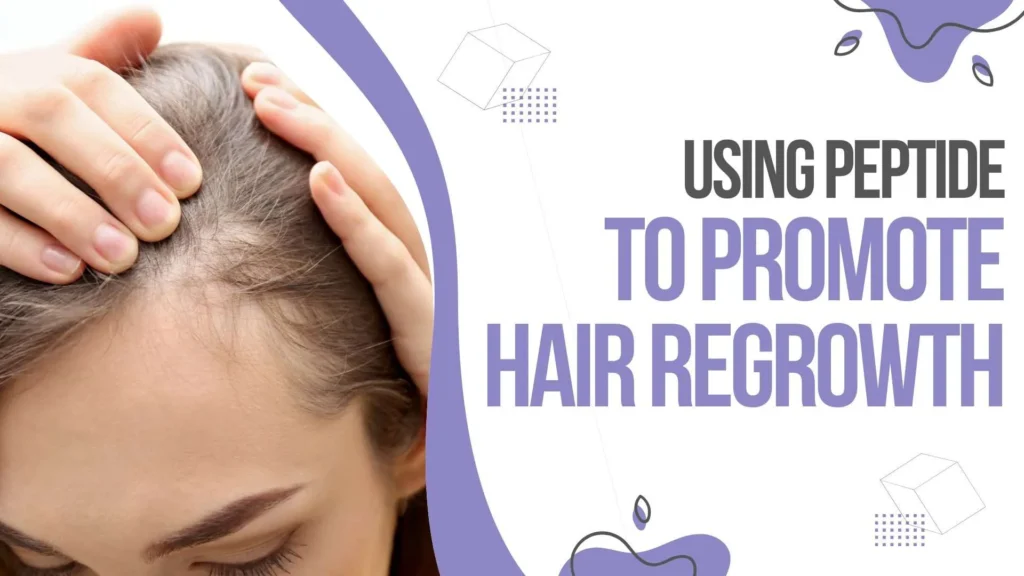
Hair regrowth is a major concern for many individuals, whether due to genetic factors, aging, or other contributing factors. Fortunately, scientific advancements have provided new, promising treatments to help combat thinning hair and stimulate growth.
Among these, peptides for hair regrowth are introduced as one of the most innovative solutions. This article will explore how peptide-based hair restoration works, the best peptides for hair growth, and how you can use peptides for thinning hair to achieve thicker, healthier hair.
What Are Peptides?
Peptides are short chains of amino acids, typically comprising 2 to 50 amino acids, linked by peptide bonds. They are the building blocks of proteins, which are longer chains of amino acids. Due to their smaller size, peptides are generally easier for the body to absorb than proteins.
In skincare, peptides are valued for their ability to stimulate collagen production, which can enhance skin elasticity and reduce the appearance of fine lines and wrinkles. This makes them a popular ingredient in anti-aging products.
The Hair Growth Cycle

Before going into how peptides can aid hair regrowth, it’s important to understand the natural hair growth cycle. This cycle consists of three distinct phases:
- Anagen Phase (Growth Phase): This is the active phase where hair follicles grow and produce new hair strands. It typically lasts 2-3 years.
- Catagen Phase (Transitional Phase): During this short phase (2-3 weeks), hair growth slows, and the hair follicle begins to shrink.
- Telogen Phase (Resting Phase): The hair follicle rests, and the old hair strand is eventually shed, making room for a new one. This phase lasts around 3 months.
In individuals experiencing hair loss, this cycle is disrupted, often leading to a shorter anagen phase or prolonged telogen phase, resulting in thinning hair or bald patches.
How Do Peptides Promote Hair Regrowth?
Peptides for hair regrowth are thought to promote hair regrowth through several mechanisms, including:
Stimulation of Hair Follicle Growth
Certain peptides can activate the hair follicle’s growth phase (anagen), producing thicker, healthier hair. Peptides can work by stimulating dermal papilla cells at the base of the hair follicle, which plays a key role in hair follicle growth and regeneration.
Enhancing Scalp Blood Circulation
Peptides may improve blood flow to the scalp, ensuring that hair follicles receive an adequate supply of oxygen and nutrients necessary for hair growth. By improving circulation, peptides help create a more favorable environment for follicle activity.
Anti-Inflammatory and Antioxidant Properties
Inflammation and oxidative stress are known to negatively affect hair growth. Some peptides have anti-inflammatory and antioxidant properties that can reduce scalp inflammation, protect hair follicles from damage, and improve the overall health of the scalp environment.
Blocking DHT (Dihydrotestosterone)
DHT is a potent androgen hormone that is primarily responsible for androgenic alopecia (pattern baldness). Some peptides have been shown to block or inhibit the activity of DHT at the hair follicle level, reducing hair thinning and promoting regrowth.
Cell Regeneration and Repair
Peptides can promote the repair and regeneration of hair follicles that may have been damaged or weakened by age, genetic factors, or other causes of hair loss. By stimulating collagen production, peptides can also help maintain the structural integrity of hair follicles and surrounding tissues.
Common Types of Peptides and Their Uses
Peptides are short chains of amino acids that play numerous critical roles in the body, depending on their structure and type. Below is a breakdown of the common types of peptides and their uses based on the provided information:
- Oligopeptides: These are antioxidants that support skin health and muscle function. Examples include Carnosine and Glutathione.
- Polypeptides: Serve as hormonal regulators essential for metabolism and social behaviors. Examples include Insulin and Oxytocin.
- Antimicrobial Peptides (AMPs): Act as natural antibiotics protecting against infections. Examples include Bacitracin and Defensins.
- Endocrine Peptides: Help regulate appetite and energy balance. Examples include Leptin and Ghrelin.
- Neuropeptides: Modulate pain perception and emotional responses. Examples include Substance P and Endorphins.
- Collagen Peptides: Enhance skin appearance and joint health. Examples include Hydrolyzed Collagen and Collagen Supplements.
- Creatine Peptides: Performance enhancers for athletes. Examples include Creatine Monohydrate and Creatine Hydrochloride.
- BPC-157: Promotes healing and tissue repair, enhances collagen synthesis, and reduces inflammation.
- Ipamorelin (5CC): Stimulates growth hormone release, aiding muscle growth and fat loss, and improves recovery.
- BPC-157 + TB-500 (5CC): Combines benefits for enhanced healing and recovery, particularly effective for tendon and ligament repair.
- Sermorelin (5CC): Helps stimulate natural growth hormone production and supports muscle growth.
- Tesamorelin (5CC): Used to reduce visceral fat, improve body composition, and enhance metabolic health.
- PT-141: Enhances sexual arousal and function; used in treating sexual dysfunction.
- Epitalon (5CC): Associated with anti-aging effects; promotes cellular regeneration and longevity.
These hair regrowth peptides are applied for various therapeutic and performance-enhancing purposes, ranging from anti-aging and skin care to recovery, muscle growth, and metabolic health. Peptide therapy can be tailored to specific health or wellness needs.
How Does Peptide Therapy Work?
Peptide therapy for hair regrowth harnesses the power of specific peptides to rejuvenate hair follicles and enhance hair density. Here’s how it works:
- Hair Follicle Stimulation: Some peptides act as dihydrotestosterone (DHT) blockers, a hair thinning hormone. These peptides may encourage their growth and activity by interacting with hair follicles.
- Improved Blood Circulation: Peptides like copper peptides enhance blood flow to the scalp, ensuring that hair follicles receive adequate oxygen and nutrients.
- Nourishment and Structural Support: Peptides provide building blocks necessary for hair health, contributing to stronger and thicker strands.
- Anti-inflammatory Effects: Certain peptides help mitigate inflammation in the scalp, creating a more conducive environment for new hair growth.
Why Should You Consider Peptides for Hair Regrowth?

Peptides for hair loss offer several advantages over traditional treatments, such as oral medications or hair transplant surgery:
- Non-Invasive: Peptide-based treatments do not require surgery or injections, making them a non-invasive option for those seeking hair regrowth.
- Targeted Action: Peptides specifically target hair follicles and the scalp, working to address the underlying causes of thinning hair, such as poor circulation or hormonal imbalances.
- Minimal Side Effects: Compared to pharmaceutical drugs or other invasive treatments, peptides tend to have fewer side effects, making them a safer alternative for many people.
- Proven Results: While results may vary, numerous studies and patient testimonials indicate that peptides can significantly improve hair thickness and density over time.
References
Cooper, G. A. A. (2014). Anatomy and Physiology of Hair, and Principles for its Collection. Hair Analysis in Clinical and Forensic Toxicology, 1-22.
Dierckx S, Patrizi M, Merino M, González S, Mullor JL, Nergiz-Unal R. Collagen peptides affect collagen synthesis and the expression of collagen, elastin, and versican genes in cultured human dermal fibroblasts. Front Med (Lausanne). 2024 May 1;11:1397517.
Du F, Li J, Zhang S, Zeng X, Nie J, Li Z. Oxidative stress in hair follicle development and hair growth: Signalling pathways, intervening mechanisms and potential of natural antioxidants. J Cell Mol Med. 2024 Jun;28(12):e18486.
Park S, Lee J. Modulation of Hair Growth Promoting Effect by Natural Products. Pharmaceutics. 2021 Dec 15;13(12):2163.
Wang L, Wang N, Zhang W, Cheng X, Yan Z, Shao G, Wang X, Wang R, Fu C. Therapeutic peptides: current applications and future directions. Signal Transduct Target Ther. 2022 Feb 14;7(1):48.
Peptides are one part of a wider set of options. If you are in the Denver area and want to talk through which approach fits your situation, see our hair restoration services in Denver.