
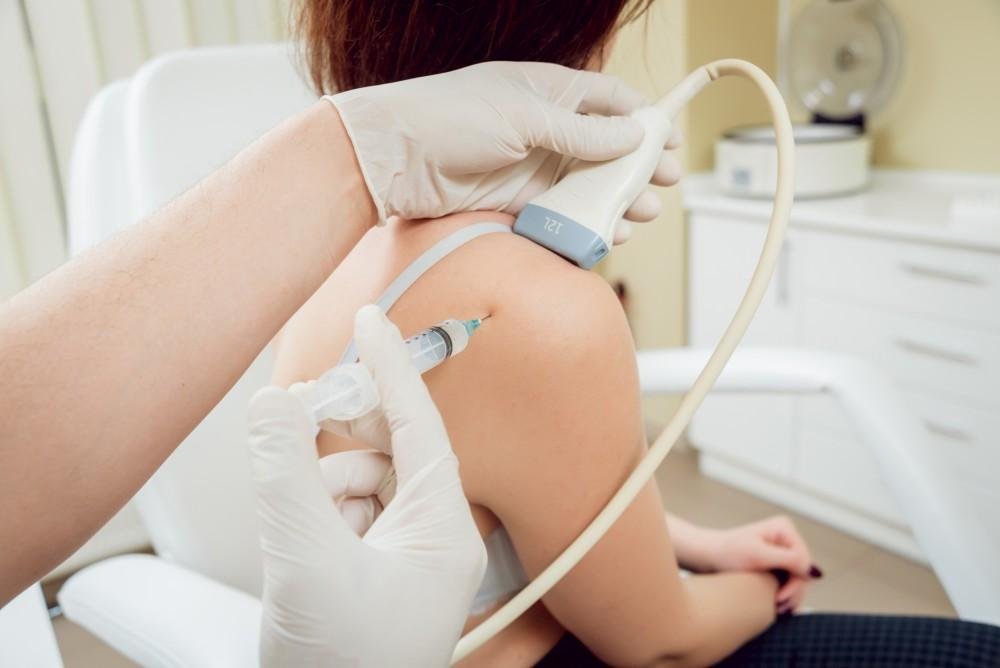
Platelet-rich plasma (PRP) is an emerging option for shoulder injury treatment, particularly in cases involving overuse, inflammation, or soft tissue damage. It consists of injecting concentrated platelets from the patient’s blood to promote tissue repair and reduce pain. This article outlines how PRP therapy works, its clinical applications for shoulder injuries, and when it may be recommended.
What Causes Shoulder Injuries?
Shoulder injuries can result from acute trauma, repetitive strain, or degenerative changes affecting the joint and surrounding soft tissues.
- Rotator cuff tears: These are often caused by repetitive overhead movements or age-related tendon degeneration, leading to weakness and a limited range of motion.
- Tendinitis or bursitis: Inflammation of the tendons or bursae from overuse or mechanical irritation, commonly seen in athletes or manual laborers.
- Labral tears: Damage to the cartilage rim that stabilizes the shoulder socket, usually following dislocation or high-impact trauma.
- Shoulder impingement: Narrowing the space between the acromion and rotator cuff tendons, resulting in pain during arm elevation.
- Fractures or dislocations: Sudden trauma, such as falls or collisions, can disrupt bone integrity or joint alignment.
Understanding the underlying cause is essential when selecting the appropriate shoulder injury treatment, including whether PRP may be suitable.
What Is PRP Therapy and How Does It Work?
Platelet-rich plasma (PRP) therapy is a regenerative procedure that delivers a high concentration of autologous platelets to damaged tissue to promote repair. In shoulder injury treatment, it is most commonly used for rotator cuff pathology, where it may reduce inflammation and support structural healing without requiring surgery.
A review of randomized controlled trials by Rathod et al. (2024) found that PRP improved shoulder function and was well tolerated in patients with chronic partial supraspinatus tears. The same study emphasized PRP’s therapeutic effect in promoting tendon healing and reducing symptoms. These findings support its growing use in shoulder injury treatment as a conservative, biologically based option.
Growth Factor Release
Activated platelets release essential growth factors such as platelet-derived growth factor (PDGF), vascular endothelial growth factor (VEGF), and transforming growth factor-beta (TGF-β). These molecules stimulate cell proliferation, angiogenesis, and extracellular matrix production at the injury site. Together, they initiate and sustain the tendon healing response.
Angiogenesis Stimulation
PRP upregulates VEGF, which promotes the formation of new blood vessels in hypovascular regions of tendon tissue. This enhanced vascularization increases oxygen delivery and waste removal, creating an optimal environment for recovery. Improved circulation is essential in chronic tendon injuries where healing is often delayed.
Collagen Synthesis
Fibroblast activation by PRP increases type I collagen production, reinforcing the structural integrity of the healing tendon. This supports extracellular matrix remodeling and improves load-bearing capacity. Restoring collagen content is central to regaining shoulder function and tendon resilience.
Anti-Inflammatory Action
By releasing anti-inflammatory mediators, PRP reduces levels of pro-inflammatory cytokines such as interleukin-1β (IL-1β) and tumor necrosis factor-alpha (TNF-α). This helps mitigate local inflammation, swelling, and pain. The modulation of inflammation creates a more favorable environment for tissue repair.
Cellular Recruitment
Through chemotactic signaling, PRP attracts mesenchymal stem cells (MSCs), fibroblasts, and tenocytes to the injury site. These cells contribute to tissue regeneration by producing new matrix components and supporting tendon restoration. Their presence accelerates early-stage healing and supports sustained recovery.
Tissue Remodeling
Beyond the initial repair, PRP helps reorganize collagen fibers and reduces fibrotic scar formation. This leads to more functional tendon architecture and improved biomechanical properties. Tissue remodeling enhances long-term recovery and reduces the likelihood of chronic dysfunction.
Tendon-to-Bone Healing
In cases involving the tendon-bone interface, PRP promotes fibrocartilage formation and supports better integration between the tendon and its insertion point. This improves the mechanical strength of the repair and lowers the risk of re-injury. Tendon-to-bone healing is especially relevant in patients undergoing surgical or non-operative care for partial tears.
When Is PRP Recommended for Shoulder Injury Treatment?
PRP is typically recommended for specific shoulder injuries where tissue healing is possible without surgical intervention.
- Chronic partial rotator cuff tears: PRP may improve function and reduce pain when conservative measures fail, especially in degenerative supraspinatus tendon injuries.
- Tendinopathies: Patients with persistent shoulder tendinitis that has not responded to physical therapy or NSAIDs may benefit from PRP to modulate inflammation and promote repair.
- Post-operative augmentation: In some cases, PRP is applied after rotator cuff surgery to support tendon-to-bone healing and reduce recovery time.
- Subacromial impingement: PRP may be considered for patients with ongoing pain and soft tissue inflammation where corticosteroid injections are contraindicated or ineffective.
- Athletes with overuse injuries: PRP can reduce downtime and support faster return to activity in non-complete tendon injuries or chronic strain.
Patient selection is critical, and PRP is often most effective in cases where structural integrity is partially preserved and surgery is not immediately indicated.
Comparing PRP to Stem Cell Treatment for Shoulder Injury
PRP and stem cell therapies are biologic options for shoulder injury treatment, but they differ in source, mechanism, and clinical application.
Criteria | PRP Therapy | Stem Cell Treatment |
Source | Derived from the patient’s blood through centrifugation. | Derived from bone marrow, adipose tissue, or umbilical sources. |
Mechanism | Delivers growth factors to stimulate healing and reduce inflammation. | Provides undifferentiated cells capable of tissue regeneration and repair. |
Clinical Use | Often used for partial tears, tendinopathies, or post-operative support. | Considered for more complex or degenerative conditions with limited healing. |
Evidence Base | Supported by randomized trials for chronic rotator cuff injuries. | Emerging evidence, with ongoing studies, explores its long-term safety and efficacy. |
Procedure Complexity | Outpatient, minimally invasive, and cost-effective. | More complex, it may require specialized harvesting and cell processing facilities. |
Regulatory Status | Widely used in clinical practice with minimal regulation. | Regulated more strictly, as some applications remain investigational. |
Patient Candidacy | Suitable for mild to moderate injuries with preserved tendon structure. | It may be explored when PRP fails or in advanced degeneration without a surgical option. |
While both treatments are regenerative, PRP is typically preferred as a first-line biologic approach, while stem cell treatment for shoulder injury is reserved for select cases or investigational use.
Is PRP Effective for Shoulder Impact Injury Treatment?
PRP therapy is widely studied for rotator cuff tendinopathy and may offer measurable short-term benefits for patients with shoulder impact injuries. In a systematic review and meta-analysis by Roy et al. (2025), the findings include:
- Short-term pain reduction: Multiple randomized trials reported significant pain relief within 3 to 6 months post-injection, with PRP outperforming placebo and corticosteroid groups in early-phase recovery.
- Functional improvement: Trials documented 15–20% higher gains in functional scores (e.g., CMS) among PRP-treated patients, including better range of motion and improved strength.
- Daily activity performance: Patients receiving PRP reported enhanced ability to perform daily tasks with less discomfort, particularly in non-surgical cases.
- Limitations in long-term outcomes: Beyond 6–12 months, pain scores and function often plateaued, with some studies showing no sustained advantage over control treatments.
- Structural imaging findings: Early tendon thickening and reduced inflammation were observed on ultrasound and MRI, but these effects diminished over time in some cohorts.
- Variable retear rates: While some patients experienced re-injury, long-term data showed mixed results, suggesting PRP may not consistently prevent structural failure.
PRP remains a viable short-term option for shoulder impact injury treatment, especially in patients seeking non-surgical relief. However, its long-term role continues to be evaluated, and standardized protocols are needed to optimize outcomes.
Conclusion
PRP therapy offers a biologically based approach to shoulder injury treatment, particularly in cases of rotator cuff tendinopathy, partial tears, and overuse-related inflammation. Evidence supports its short-term benefits in reducing pain and improving function, though its long-term efficacy varies across patient populations. As research advances and protocols become more standardized, PRP may continue to play a meaningful role in conservative shoulder injury management.
Resources
Rathod, V., Shrivastav, S., & Gharpinde, M. R. (2024). Platelet-rich plasma therapy for rotator cuff injuries: A comprehensive review of current evidence and future directions. Cureus, 16(9), e70042. https://doi.org/10.7759/cureus.70042
Roy, M., Reddy, M. H., Das, D., Priyanshu, Chandrakar, D., & Elavarasu, A. M. (2025). Effectiveness of platelet-rich plasma in treating rotator cuff tendinopathy: A systematic review and meta-analysis. Journal of Orthopedic Case Reports, 15(3), 265–274. https://doi.org/10.13107/jocr.2025.v15.i03.5408