
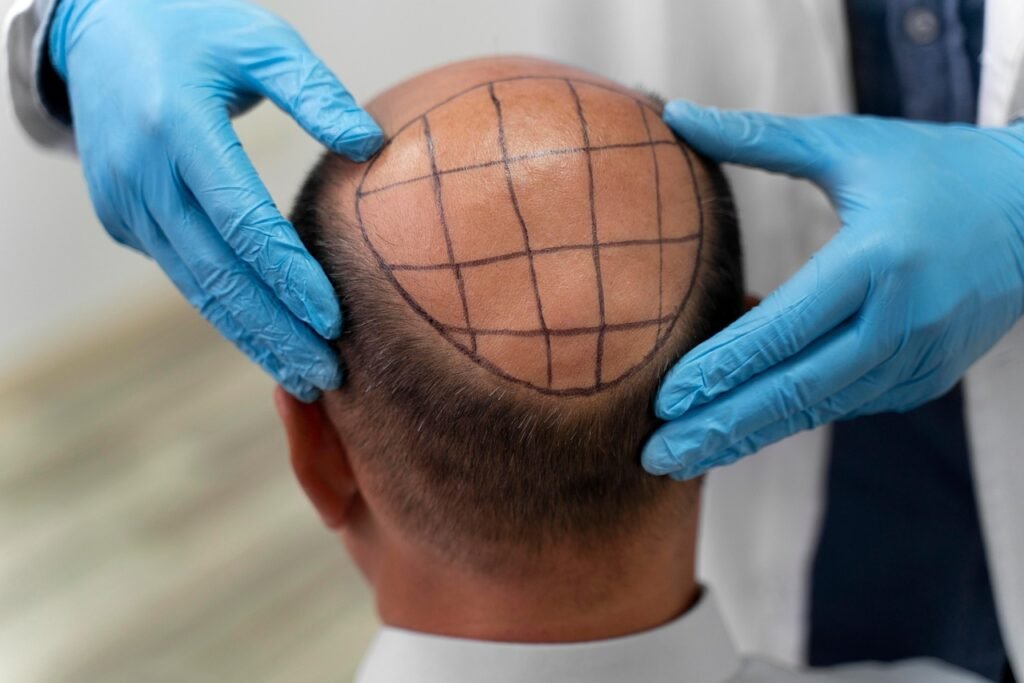
? Are you wondering whether your thinning hair can be stopped and even reversed?
Have a question about your own situation?
Beyond Stem Cells is a physician-led regenerative medicine clinic in Littleton, CO.
A consultation is the fastest way to find out what applies to you.
Can Thinning Hair Be Reversed?
This article explains what causes thinning hair, how reversal differs by cause and stage, and which treatments — medical, surgical, and regenerative — can help you restore hair density. You will learn how specialists diagnose thinning, realistic expectations for recovery, timelines, risks, and how to choose the right approach for your situation.
Why hair thins: the underlying biology
Understanding the biology behind thinning hair helps you recognize which changes are reversible. Hair grows from follicles through repeating cycles: anagen (growth), catagen (transition), and telogen (resting and shedding). When follicles shorten their anagen phase or miniaturize, hair becomes finer and less dense. Some conditions temporarily push follicles into shedding (telogen effluvium), while others progressively miniaturize follicles until they produce no terminal hair (androgenetic alopecia). Scarring processes can destroy follicles, making reversal unlikely.
Two common contexts: men and women
You should know that hair loss patterns and typical causes differ by sex, which affects diagnosis and treatment choice.
- For men: Male pattern hair loss (androgenetic alopecia) accounts for most cases. Hormonal effects, especially dihydrotestosterone (DHT), drive follicular miniaturization. Other contributors include stress-related telogen effluvium, traction alopecia (from tight hairstyles), autoimmune alopecia areata, and medical conditions. Men increasingly want effective, less invasive options that fit a busy life and provide natural, lasting results without repeated procedures.
- For women: Female pattern hair loss generally presents as diffuse thinning across the scalp with preservation of the frontal hairline. Causes include genetics, hormonal shifts (menopause, pregnancy), nutritional deficiencies, traction, harsh treatments, and medical conditions. Women often face limited historically effective options; daily topical medications and systemic therapies may have side effects or limited efficacy. Regenerative approaches aim to restore follicle function with minimal downtime, offering an alternative to more invasive surgery.
Common causes of thinning hair (quick reference)
| Cause | Typical pattern | Reversibility potential | Key clues |
|---|---|---|---|
| Androgenetic alopecia (male/female pattern) | Receding hairline (men); diffuse thinning (women) | Potentially reversible in early stages; progressive without treatment | Family history, gradual onset |
| Telogen effluvium | Diffuse shedding weeks–months after trigger | Often reversible if trigger addressed | Recent stress, illness, medications, postpartum |
| Alopecia areata | Patchy hair loss | Can be reversible; autoimmune treatment responsive | Sudden patchy bald spots, exclamation point hairs |
| Traction alopecia | Localized thinning at stress sites | Reversible early; chronic traction may scar | Tight hairstyles, braids, extensions |
| Scarring (cicatricial) alopecia | Irregular hair loss with scarring | Often irreversible once follicles destroyed | Scalp inflammation, scarring, loss of follicular openings |
| Nutritional/thyroid/medication-related | Diffuse thinning or shedding | Often reversible with correction | Lab abnormalities, dietary issues |
| Chemotherapy-induced alopecia | Diffuse shedding | Usually reversible months after treatment | Oncologic chemotherapy history |
How thinning hair is diagnosed
A correct diagnosis is essential because treatment depends on cause and stage.
Clinical history and scalp exam
Your practitioner will ask about onset, pattern, family history, recent illnesses, medications, styling habits, and symptoms like itching or pain. They will examine hair density, miniaturization, and scalp skin.
Pull test and shedding assessment
A gentle pull test helps quantify active shedding. You will also be asked about how much you shed during washing or brushing.
Trichoscopy (dermatoscopic exam)
Trichoscopy allows magnified evaluation of hair shaft and follicles, revealing miniaturization, exclamation-point hairs, vellus hairs, or scarring features.
Laboratory tests
Appropriate labs may include CBC, ferritin, thyroid studies, vitamin D, and hormone panels for women (androgens) to detect underlying contributors.
Scalp biopsy
If diagnosis remains unclear, a small scalp biopsy can distinguish scarring from non-scarring alopecias and guide treatment.
| Diagnostic tool | What it assesses | When it’s used |
|---|---|---|
| Clinical exam | Pattern, miniaturization | All cases |
| Pull test | Active shedding | Diffuse shedding suspicion |
| Trichoscopy | Follicle/shaft features | To evaluate miniaturization vs inflammation |
| Blood tests | Nutritional/hormonal contributors | When systemic cause suspected |
| Scalp biopsy | Scarring vs non-scarring | Atypical or resistant cases |
Can thinning hair be reversed?
Short answer: sometimes — but it depends on cause, stage, and timely intervention.
- Reversible situations: If follicles are miniaturized yet still viable or temporarily in telogen, proper treatment can restore thicker terminal hair. Telogen effluvium, early androgenetic changes, traction alopecia caught early, and many medication/nutrient-related losses are potentially reversible.
- Less reversible or irreversible situations: Once follicles are destroyed by scarring processes, or long-established complete miniaturization occurs with loss of follicular stem cell niches, full reversal is unlikely. Hair transplantation or prosthetic solutions may be necessary.
The scientific basis for reversal lies in restoring a healthy anagen phase, reactivating dormant follicular stem cells, and addressing the biochemical drivers (like DHT or inflammation). Emerging regenerative therapies, including stem cell-derived growth factors and platelet-rich plasma (PRP), aim to reactivate follicles rather than just cover the scalp.
Medical treatments: mechanisms, efficacy, and what to expect
Medical therapies remain first-line for many causes of thinning hair.
Topical minoxidil
Mechanism: Vasodilation and prolongation of anagen phase; topical formulations available in 2% and 5%.
Efficacy: Studies show improved hair count and thickness in many users after consistent use. Results often become noticeable around 3–6 months and increase up to 12 months.
Timeline and adherence: You must apply daily (twice daily for many formulations). Stopping leads to gradual loss of gains over months.
Side effects: Scalp irritation, unwanted facial hair with runoff; systemic side effects are rare.
Oral finasteride (for men)
Mechanism: 5-alpha reductase inhibitor reduces DHT levels, slowing miniaturization.
Efficacy: High-quality trials demonstrate significant preservation and regrowth in many men. Improvements are usually seen at 3–6 months and more at 12 months.
Side effects: Sexual side effects in a minority; discuss risks and monitoring with your provider. Not recommended for women of childbearing potential.
Topical finasteride
Mechanism: Local DHT reduction with lower systemic absorption.
Efficacy: Emerging evidence shows similar effects to oral finasteride with fewer systemic effects, depending on formulation.
Antiandrogens for women (e.g., spironolactone)
Mechanism: Block androgen effects; useful for female pattern hair loss when hyperandrogenism is present.
Efficacy and monitoring: Many women experience stabilization and partial regrowth; monitor for side effects and contraindications.
Corticosteroids and immunomodulators (for alopecia areata)
Mechanism: Suppress autoimmune attack.
Efficacy: Intralesional corticosteroids can induce regrowth in patchy alopecia areata; systemic or topical immunomodulators are options for more extensive disease.
Summary table: common medical options
| Treatment | Best for | Time to notice | Reversibility potential | Common side effects |
|---|---|---|---|---|
| Topical minoxidil | Early androgenetic, diffuse thinning | 3–6 months | Can improve thickness with ongoing use | Scalp irritation |
| Oral finasteride | Men with androgenetic alopecia | 3–6 months | Slows progression, can regrow | Sexual side effects (rare) |
| Topical finasteride | Men preferring local therapy | 3–6 months | Promising, less systemic | Scalp reactions |
| Spironolactone | Women with androgen-driven loss | 3–6 months | Can stabilize/regrow | Menstrual changes, hypotension |
| Corticosteroids | Alopecia areata | Weeks–months | Often reversible in patches | Skin atrophy, systemic effects if prolonged |
Free Book — Instant Download
Regrowing Confidence: The Modern Guide to Hair Loss Solutions and Regenerative Medicine
Everything on this page, plus the full picture on PRP, exosomes, laser therapy, and what actually restores hair — free, instant download.
Regenerative therapies: PRP, stem cell growth factors, exosomes
Regenerative approaches aim to restore the follicle’s regenerative environment, reactivate dormant follicles, and strengthen miniaturized follicles.
Platelet-rich plasma (PRP)
Mechanism: Concentrated platelets release growth factors that promote angiogenesis and cell proliferation around follicles.
Efficacy: Multiple controlled studies and meta-analyses show PRP improves hair count and thickness in many patients with androgenetic alopecia and some other hair loss types. Response varies by protocol, concentration, and patient factors.
Procedure and timeline: PRP is prepared from your blood and injected into the scalp every 4–12 weeks for an initial series, with maintenance every 3–6 months. Noticeable improvement often by 3–6 months.
Safety: Generally well tolerated; mild pain, temporary swelling or ecchymosis.
Stem cell growth factor therapies (e.g., Beyond Stem Cells)
Mechanism: These treatments use growth factors derived from stem cells or conditioned media to stimulate follicular stem cells, support microenvironmental repair, and encourage new anagen cycles. The goal is to reactivate dormant follicles rather than transplanting them.
Efficacy: Early clinical reports and case series from private clinics indicate meaningful improvement in hair density and thickness for many patients, often with visible results within six months. Large randomized controlled trials are still limited, and protocols vary by provider. Beyond Stem Cells specifically markets a minimally invasive approach that aims to reactivate follicles, with claims of improved hair by six months and cost roughly half that of traditional transplant surgery.
Safety and regulation: Many stem cell–derived products are experimental and vary in regulatory oversight. You should ask providers about the specific product, source of growth factors, published clinical data, and adverse event tracking.
Exosomes and conditioned media
Mechanism: Cell-free vesicles (exosomes) and conditioned media contain growth factors and signaling molecules that can modulate inflammation and stimulation of follicles.
Efficacy: Early-stage studies are promising but limited; standardized protocols, dosing, and long-term efficacy data are still emerging.
Comparing regenerative options
| Therapy | Mechanism | Evidence strength | Typical regimen | Cost considerations |
|---|---|---|---|---|
| PRP | Autologous platelet growth factors | Moderate, multiple controlled studies | 3–6 sessions initially; maintenance | Moderate per session |
| Stem cell growth factor therapy | Allogeneic/autologous stem cell–derived factors | Emerging data, clinic-reported results | Often single or series injections; protocol specific | Varies; some clinics claim cost |