What happens to a hair follicle in pattern hair loss?
In pattern hair loss, each hair follicle slowly shrinks, a process the book calls miniaturization. The growing phase of the hair growth cycle gets shorter and the resting phase gets longer, so hairs come in finer until they are hard to see. According to Beyond Stem Cells, PRP and stem cells aim to support the follicles you still have.
Key points
- Androgenic alopecia, or pattern hair loss, is the most common cause of hair loss in both men and women. It runs in families and is tied to hormones.
- DHT, a hormone that comes from testosterone, slowly shrinks the hair follicle in people who are genetically sensitive to it.
- Hair growth cycle: miniaturization shortens the growing phase (anagen) and stretches the resting phase (telogen), so each new hair is finer.
- Hair follicle function is run by the dermal papilla, a cluster of cells at the base of each follicle that the book calls the command center.
- PRP hair loss treatment uses your own blood, spun so the platelets are concentrated, then injected into the scalp. Its growth factors may help stretch out the growing phase.
- Stem cells here are MSCs from donated umbilical cord or placenta tissue. They do not move hair; they work on the environment around the follicles you already have.
- PRP hair results are gradual, according to the book: less shedding first, then fine new hairs that can thicken and darken, with the full effect closer to a year out.
- PRP hair loss side effects the book describes are mild: some redness, swelling or tenderness for a day or two.
- Hair follicle regrowth support is ongoing care, not a one-time visit. The book compares it to regular dental cleanings.
Hair Follicles and Hair Loss
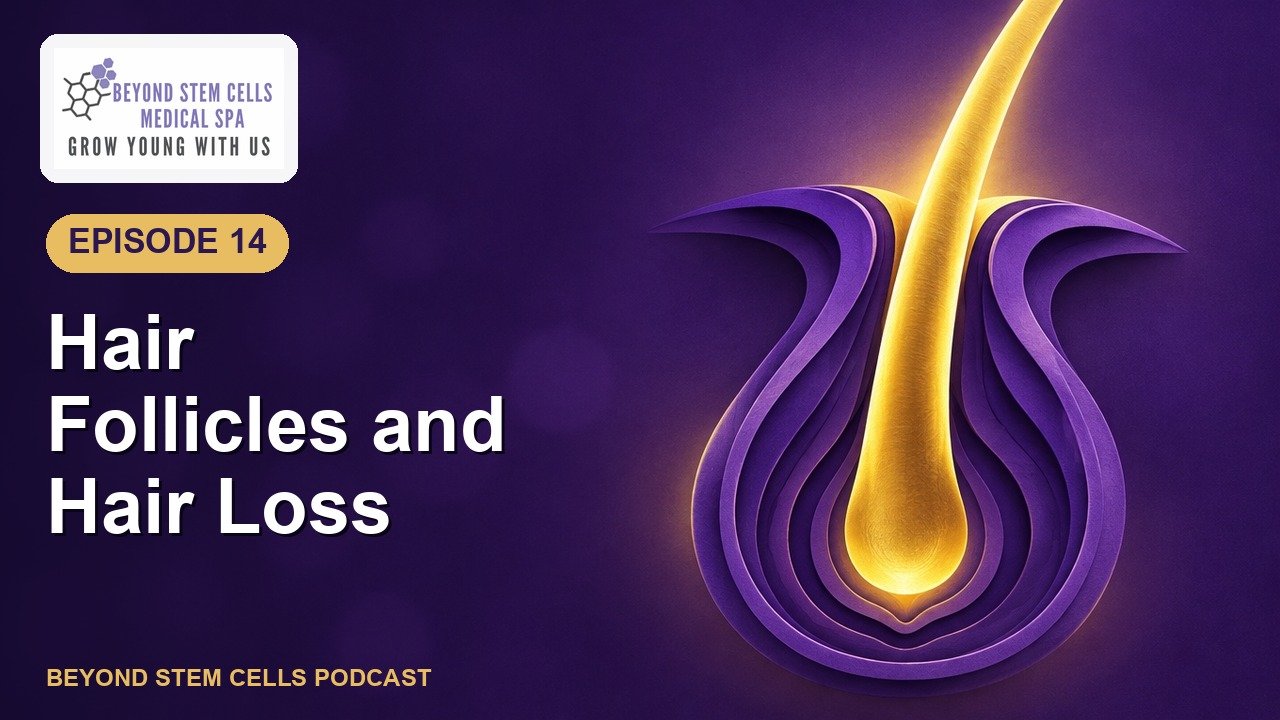
Read the full transcript · Download the MP3 · Voices are AI-generated from a script based on the book.
How a hair follicle shrinks: pattern hair loss explained
Hair loss is one of the most common worries for both men and women, and the leading cause is androgenic alopecia, also called pattern hair loss. It runs in families and responds to hormones. Stress, low nutrients and some medical conditions can also play a part, but the book says pattern hair loss is far more common.
What is a hair follicle?
A hair follicle is the tiny structure in your skin that anchors each strand of hair. In pattern hair loss, follicles do not simply let go of their hair. They gradually shrink until the hair they make is so fine it is barely visible.
DHT and miniaturization
According to the book, the main driver is a sensitivity to DHT, a hormone that comes from testosterone. When DHT binds to follicles in people who are genetically prone, it slowly weakens them. The book calls this miniaturization.
What changes in the hair growth cycle
Every follicle cycles between a growing phase, called anagen, and a resting phase, called telogen. Miniaturization makes the growing phase shorter and the resting phase longer. Over many cycles, each new hair comes in finer than the one before.
Why it looks different in men and women
Men usually thin at the temples and the crown, making the familiar M shape. Women usually keep the front hairline but thin out all over, so the change is less density rather than bare patches. The book notes that the pace varies a lot from person to person, from a few years to decades.
Hair follicle function: the dermal papilla and the scalp environment
Regenerative approaches try to send signals that nudge follicles back into the growing phase. The book describes several targets that work together.
The dermal papilla is the command center
At the base of each follicle sits a small cluster of cells called the dermal papilla. The book calls it the follicle's command center because it runs hair growth and the whole cycle. That makes it the main target for growth signals.
Blood flow to the scalp
Follicles need oxygen and nutrients to stay in the growing phase. Better circulation in the scalp helps deliver that supply, which the book says matters for keeping follicles active.
Can inflammation affect hair?
Yes, according to the book. Ongoing inflammation in the scalp can push hair into the resting phase too early. Calming that inflammation is one of the ways regenerative treatments aim to support healthy hair cycles.
PRP hair loss treatment and stem cells: how they differ
The book covers two main regenerative approaches for hair, plus the idea of using them together.
How PRP for hair loss works
PRP starts with a small blood draw. The blood is spun so the platelets become concentrated, then the plasma is injected into the scalp. Platelets carry growth factors, and the book says these talk to the follicle cells and may help extend the growing phase. Because it is your own blood, the book says the risk of a reaction stays low.
How stem cells support existing follicles
Stem cell therapy for hair is not a transplant, and nothing gets moved. The stem cells are MSCs from donated umbilical cord or placenta tissue. According to the book, they release exosomes, tiny message packages that tell follicle cells to wake up, they help calm inflammation, and they support the growth of tiny new blood vessels for more oxygen and nutrients.
Why combine PRP and stem cells?
The book describes using the two together: PRP as the quicker kick, stem cells as the slow, steady part of the plan. The book compares PRP to good soil that helps the stem cells thrive.
PRP hair results, side effects and upkeep
Hair cycles are slow, so the book is clear that change is gradual and depends on how far along the hair loss is.
What to expect over time
According to the book, the first thing some people may notice, within the first few months, is less shedding. New growth may follow as fine, light hairs that can thicken and darken. The full effect is usually closer to a year out.
Why starting earlier matters for hair follicle regrowth
The book says earlier care tends to go better, while more follicles are only sleeping rather than gone. How far the hair loss has progressed and the health of the follicles both shape what is possible.
What the appointment is like
Treatment happens in the office. The scalp is cleaned and numbed, sometimes microneedling is used to make tiny channels so everything spreads better, and then fine needle injections are given. The book says it usually takes under an hour.
Side effects and maintenance
Afterward there may be some redness, swelling or tenderness for a day or two, and most people go right back to their day. These treatments do not stop genes and hormones from doing their thing, so the book describes a first series of a few sessions followed by touch-ups about once or twice a year, much like regular dental cleanings.
Chapter 14 in one line
These treatments try to help the follicles you already have. Start early, and keep up with it.
Episode 14 transcript.
Read along, or skim the parts you care about most.
EliseOkay so, chapter fourteen. And this one's about hair loss.
GuideYep. Which a lot of people worry about. Men and women.
EliseWomen too?
GuideOh, definitely. The most common cause is called androgenic alopecia. Basically pattern hair loss.
EliseOkay, that's a mouthful.
GuideIt is. It runs in families, and it's tied to hormones. There's one called DHT, it comes from testosterone.
EliseMm-hm.
GuideAnd in people who are, you know, genetically sensitive, DHT slowly shrinks the hair follicles.
EliseFollicles being the little... roots?
GuidePretty much. The tiny structures in your skin that hold each hair. And as they shrink, the hairs get finer and finer until you basically can't see 'em.
EliseHuh. So the hair isn't just falling out, it's getting smaller.
GuideRight. The book calls that miniaturization. The growing phase gets shorter, the resting phase gets longer.
EliseDoes it look different for men and women?
GuideUsually, yeah. Men tend to thin at the temples and the crown. That M shape.
EliseOh, sure.
GuideWomen usually keep the front hairline but thin out all over. Less density overall.
EliseOkay. So where does the regenerative stuff come in?
GuideSo the idea is sending signals that nudge those follicles back into the growing phase. Better blood flow to the scalp, calmer inflammation—
EliseWait, inflammation in your scalp?
GuideYeah! The book says ongoing inflammation can push hair into the resting phase too early.
EliseHuh. Did not know that.
GuideAnd at the base of each follicle there's this little cluster of cells called the dermal papilla. The book calls it the command center.
EliseOf course it does.
GuideIt kind of is though. It runs growth and the whole cycle. So that's the target.
EliseOkay, so PRP. Same as before? From your own blood?
GuideSame idea. They draw a little blood, spin it so the platelets get concentrated, and inject that into the scalp.
EliseAnd that does what?
GuideThe growth factors in there talk to the follicle cells, and they may help stretch out that growing phase.
EliseAnd because it's your own blood...
GuideRight, the book says that keeps the risk of a reaction low.
EliseAnd stem cells? Are they, like, moving hair around? Like a transplant?
GuideNo, and that's a good distinction. Nothing gets moved. The stem cells here are MSCs from screened donor tissue, like umbilical cord. They work on the environment around the follicles you already have.
EliseHow?
GuideThey send out exosomes, those little message packages, telling follicle cells to wake up. They calm inflammation. And they help tiny new blood vessels form.
EliseSo, better supply lines.
GuideExactly. More oxygen, more nutrients.
EliseCan you do both?
GuideYou can, and the book says the combo often works better than either one alone. PRP is the quicker kick. Stem cells are more the slow, steady—
EliseThe long game.
GuideYeah. And the book says PRP is kind of like good soil that helps the stem cells thrive.
EliseOkay, real question. How long before I see anything?
GuideSo the book says it's gradual. The first thing some people may notice, in the first few months, is less shedding.
EliseJust... less in the drain.
GuideBasically. Then new growth may show up. Fine, light hairs at first that can thicken and darken. And the full effect is usually closer to a year out.
EliseA year. Okay.
GuideHair cycles are slow. And the book's clear it depends on how far along the hair loss is. Starting earlier tends to go better, while more follicles are just sleeping, not gone.
EliseWhat's the actual appointment like?
GuideIt's in the office. They clean the scalp, numb it, sometimes do microneedling—tiny channels so everything spreads better. Then fine needle injections. Usually under an hour.
EliseAnd after?
GuideMaybe some redness or swelling for a day or two. Most people go right back to their day.
EliseIs this a one-and-done thing?
GuideNo. And that's important. It doesn't stop your genes and hormones from doing their thing. So the book says there's usually a first series of a few sessions, then touch-ups, like once or twice a year.
EliseLike the dentist.
GuideThat's literally the book's comparison! Regular cleanings, not waiting for a problem.
EliseNailed it.
GuideAnd people like that the change is gradual. It tends to just look natural. Nobody's going, whoa, what happened.
EliseOkay. So if you had to sum up chapter fourteen?
GuideThese treatments try to help the follicles you already have. Start early, and keep up with it.
EliseI like that. And, quick reminder, this is general info, not medical advice. Talk to your own provider.
GuideAlways.
This is general information, not medical advice. Talk to your own provider.
Frequently asked questions.
What does a hair follicle do?
A hair follicle is the small structure in your skin that holds each hair. At its base, a cluster of cells called the dermal papilla runs hair growth and the growth cycle. The book calls it the follicle's command center.
What is the hair growth cycle?
The hair growth cycle is the repeating pattern every hair follicle follows: a growing phase called anagen, then a resting phase called telogen, after which the hair sheds and a new one starts. The book says pattern hair loss shortens the growing phase and lengthens the resting phase, so each new hair comes in finer than the last.
What are the phases of the hair growth cycle?
The book describes a growing phase, called anagen, and a resting phase, called telogen. In pattern hair loss, the growing phase gets shorter and the resting phase gets longer, so hairs come in finer over time.
How does PRP for hair loss work?
PRP comes from your own blood, spun so the platelets are concentrated, then injected into the scalp. According to the book, its growth factors talk to follicle cells and may help extend the growing phase.
When might PRP hair results show up?
The book says change is gradual. Some people may notice less shedding in the first few months, then fine new hairs that can thicken and darken. The full effect is usually closer to a year out, and it depends on how far along the hair loss is.
What are the side effects of PRP for hair loss?
According to the book, side effects are usually mild: some redness, swelling or scalp tenderness for a day or two. Because PRP uses your own blood, the risk of a reaction stays low.
Where is Beyond Stem Cells located?
Beyond Stem Cells is at 5912 S Cody St, Suite 201, Littleton, CO 80123, serving the Denver metro. This podcast is general education, not medical advice.
Want to see how this connects to care in the Denver metro? Learn about hair restoration at Beyond Stem Cells, hair restoration for men, hair restoration for women, stem cell therapy vs PRP, FUE hair transplant, the free hair loss solutions guide.
Further reading: MedlinePlus (National Library of Medicine): hair loss.
Want the whole book? Get the free Beyond Stem Cells book.
Regenerative care in Littleton and the Denver metro.
Beyond Stem Cells sits just off S Cody St in Littleton, an easy drive from Ken Caryl, Highlands Ranch, Centennial, Englewood and Lakewood.
Questions about your own situation?
The podcast is general education. If you want to talk about your own health, request a consultation with our team.
Beyond Stem Cells · 5912 S Cody St, Suite 201, Littleton, CO 80123 · (833) 720-7836 · info@beyondstemcells.com
Medical disclaimer: This page is general education based on the book Beyond Stem Cells by John Comandari and Neville Campbell, MD. It is not medical advice. Individual results vary and no specific outcome is promised. Talk to your own provider about your situation.