What are organoids, and what else is next for regenerative medicine?
Organoids are tiny, simplified versions of organs grown from stem cells. According to the book Beyond Stem Cells, they cannot replace an organ, but researchers use them to study disease and test treatments. They sit alongside other future research the book describes, including 3D bioprinting, lab-built organ frameworks, targeted exosomes and gene editing.
Key points
- Regenerative medicine examples today mostly support healing. The book says the next step researchers are working toward is replacing and regrowing tissue.
- Bioprinting uses machines similar to 3D printers to lay down living cells and support materials in precise patterns, building tissue in a specific shape.
- Bioprinting organs and fully lab-grown organs are still a hard goal, according to the book.
- One organ idea: remove the cells from a donor organ, keep its framework, then rebuild it with cells matched to the person receiving it, which may lower rejection risk.
- Organoids are tiny organ models grown from stem cells. What are organoids used for? Studying disease and testing treatments.
- Exosomes may someday be loaded with specific repair signals and sent where they are needed. They may also help spot disease earlier through a blood test called a liquid biopsy.
- Gene editing tools like CRISPR cut DNA at a specific spot to add, remove or change a piece. Researchers are studying it for conditions such as sickle cell disease.
- The book's safety checklist: licensed providers, properly processed biologics, honest talk about the evidence, and a full discussion of risks in writing.
- Red flags: anyone who plays down risks, promises results, or pressures you to sign right away.
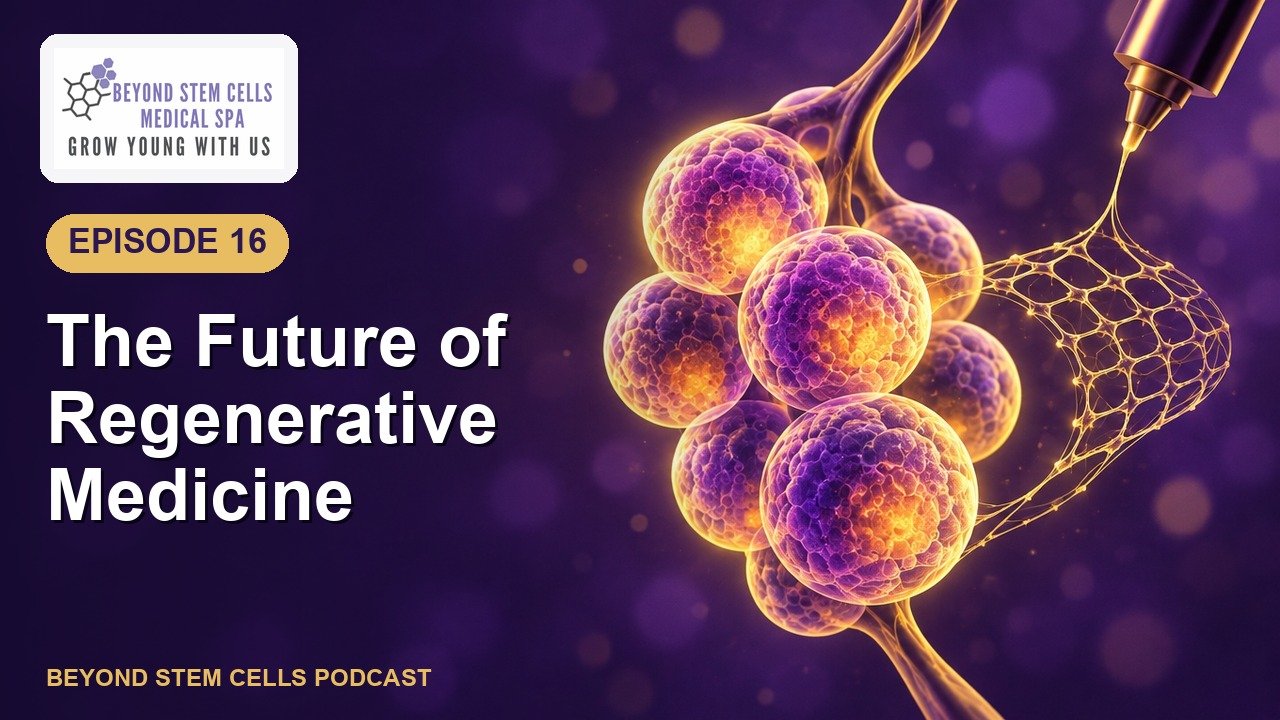
The Future of Regenerative Medicine
Read the full transcript · Download the MP3 · Voices are AI-generated from a script based on the book.
From supporting healing to rebuilding tissue: bioprinting and organs
Most regenerative treatment today is about supporting the body's own healing. The book describes the next step researchers are working toward: replacing and regrowing tissue. This is early research, and the book is clear about what is still a long way off.
How does bioprinting work?
Bioprinting uses machines that work a lot like 3D printers, but they place living cells and supporting materials in precise patterns. The goal is to build tissue with a specific shape and cell layout. The book says advanced scaffolds can guide that growth while delivering signals that direct how the tissue develops.
Rethinking organ transplants
Today, transplants depend on donors, and people need lifelong medicine so their body does not reject the new organ. One approach the book describes removes the cells from a donor organ but keeps its framework, like the frame of a house with the walls and plumbing in place. It is then rebuilt with cells matched to the person receiving it, which may lower rejection risk.
Bioprinting organs is still a hard goal
According to the book, complete lab-grown organs remain the long-term aim, bringing together bioprinting, scaffolds and advanced cell culture. Building working blood vessel networks and keeping cells properly organized are still major challenges.
What are organoids, and what are organoids used for?
While full organ replacement remains out of reach, the book describes organoids as an important stepping stone.
Organoids and stem cells
Organoids are tiny three-dimensional structures grown from stem cells. The cells organize themselves into miniature, simplified versions of organs with several cell types arranged in patterns similar to the real thing.
Models for research
Organoids cannot replace an organ. According to the book, researchers use them as models to study how diseases work and to test possible treatments, and ongoing research is making them more complex over time.
Bioartificial organs
The book also describes hybrid systems that combine living cells with artificial supporting structures to take on key organ jobs. Researchers are studying these as possible bridges while the bigger goal of lab-grown organs develops.
Exosomes and gene editing: early research to watch
Two more areas the book highlights are smarter cell signaling and precise changes to DNA. Both are research areas, and anything like this goes alongside your regular doctor's care, not instead of it.
Exosomes as a delivery service
Exosomes are tiny packages cells use to send messages. The future idea is loading them with specific repair signals and sending them right where they are needed. Researchers are studying whether they can cross the blood-brain barrier, the brain's security gate, so they are interested in them for neurological conditions.
Liquid biopsy
Exosomes carry markers from the cell they came from. According to the book, analyzing them in a blood sample may someday help spot disease earlier without cutting anything out. This is called a liquid biopsy.
CRISPR and gene editing
CRISPR cuts DNA at a specific spot so a piece can be added, removed or changed, a bit like find and replace. Researchers are studying it for conditions such as sickle cell disease and certain kinds of blindness. One method takes cells out, edits them in a lab, checks them, and then returns them.
What salamanders can teach us
Salamanders can regrow whole limbs, so scientists are looking for the genes behind that ability. The book says limb regrowth in people is a distant goal, but the research may help scientists understand natural repair.
How to tell if a regenerative treatment is legitimate
The science is moving fast, so the book gives a practical checklist for staying careful.
Green lights
Look for licensed providers with real training in regenerative techniques and properly processed biologics. Good providers are honest about the evidence, including what is still unknown. You should get a full discussion of risks, benefits and other options before anything starts, with written information too.
Red flags
Be cautious with anyone who plays down the risks, promises results, or rushes you to sign. The book specifically calls out pressure to commit right away, such as a discount for signing today.
Who oversees regenerative medicine?
In the U.S., the FDA regulates cell-based products, and the rules are still developing. According to the book, manufacturing standards help keep products clean and consistent, and results keep being tracked after approval to catch rare or delayed problems.
Ethics and access
The book discusses where stem cells come from, including induced pluripotent stem cells, which are ordinary adult cells such as skin cells reprogrammed to act like very early stem cells, with no embryos needed. It also raises concerns about new treatments reaching only people who can afford them, and about clinics selling unproven stem cell products.
Chapter 16 in one line
The science is moving fast. Stay curious, and stay careful.
Episode 16 transcript.
Read along, or skim the parts you care about most.
EliseOkay so, chapter sixteen. The last one. And this one's about... the future?
GuideThe future, yeah. Where all this is heading.
EliseFlying cars. Go.
GuideClose! So right now, a lot of regenerative treatment is about supporting healing. The next step the book talks about is actually replacing and regrowing tissue.
EliseLike, building new parts?
GuideKind of. One thing is bioprinting. Machines kind of like 3D printers, but they lay down living cells in precise patterns.
EliseWait. Printing cells?
GuidePrinting cells. To build tissue in a specific shape.
EliseThat's wild.
GuideThen there's organs. Right now transplants depend on donors, and people need medicine for life so their body doesn't reject the organ.
EliseRight.
GuideSo one idea is taking a donor organ, removing its cells, but keeping the framework.
EliseThe framework?
GuideLike the frame of a house. Walls, plumbing, all there. Then you move the patient's own cells in.
EliseOh, so the body sees it as, like, its own.
GuideThat's the idea. Less rejection risk. But the book's clear that full lab-grown organs are still a hard goal.
EliseOkay.
GuideIn the meantime there's organoids. Tiny, simple versions of organs grown from stem cells. They can't replace an organ, but researchers use them to study disease and test treatments.
EliseMini organs. Okay. And exosomes? You knew I'd ask.
GuideI did. So the future idea is loading exosomes with specific repair signals and sending them right where they're needed.
EliseLike a delivery service.
GuidePretty much. And the book says they can cross the blood-brain barrier, basically the brain's security gate, so researchers are interested in them for neurological conditions.
EliseHuh.
GuideThere's a testing side too. Exosomes carry markers from the cell they came from. So a blood sample might someday help spot disease earlier. That's called a liquid biopsy.
EliseWithout cutting anything out.
GuideRight.
EliseOkay, gene editing. That sounds kinda scary.
GuideIt sounds like sci-fi. CRISPR is the name people know. It cuts DNA at a specific spot so you can add, remove, or change a piece.
EliseLike find and replace.
GuideHonestly, yeah. Researchers are studying it for things like sickle cell disease and certain kinds of blindness. One way is taking cells out, editing them in a lab, checking them, then putting them back.
EliseSo you can double-check first.
GuideExactly. And, fun one, scientists are looking at salamanders.
EliseSalamanders?
GuideThey can regrow whole limbs! So researchers want to find the genes behind that. The book says that's a distant goal for people, but—
EliseStill cool.
GuideVery cool. But this is early research. Anything like this goes alongside your regular doctor's care, not instead of it.
EliseOkay, the part I actually care about. How do I know if a treatment is legit?
GuideSo the book gives a checklist. Licensed providers with real training. Properly processed biologics. And they're honest about the evidence, including what's still unknown.
EliseMm-hm.
GuideYou should get a full talk about risks, benefits, and other options. In writing, too.
EliseAnd red flags?
GuideAnyone who plays down the risks. Anyone who promises results. Anyone rushing you to sign.
EliseOr, like, "sign today and we'll knock the price down."
GuideYes. The book calls that out. Pressure to commit right away is a warning sign.
EliseWho's actually watching over all this?
GuideIn the U.S., the FDA. The book says lightly processed products get lighter rules, and heavily changed ones usually need clinical trials first. Plus manufacturing standards to keep things clean and consistent.
EliseAnd that's it once it's approved?
GuideNo. They keep tracking results over time, to catch anything rare or delayed.
EliseThere's ethics stuff in here too, right?
GuideYeah. Like where stem cells come from. The book talks about a newer kind, induced pluripotent stem cells. Regular adult cells, like skin cells, reprogrammed to act like very early stem cells. No embryos needed.
EliseOh, interesting.
GuideAnd cost. The worry is new treatments only reaching people who can afford them. Plus clinics selling unproven stem cell stuff.
EliseSo where does this end up? For regular people?
GuideThe book thinks it moves into everyday medicine. Your primary care provider helping spot who's a good fit and coordinating care. Insurance is all over the place right now, but coverage may grow as evidence builds.
EliseAnd more personal?
GuideYeah. Treatments tailored to you. Combined with the basics, exercise, nutrition, physical therapy. More of a partnership over time, less of a quick fix.
EliseOkay. So if you had to sum up chapter sixteen?
GuideThe science is moving fast. So stay curious, and stay careful.
EliseI like that. And, quick reminder, this is general info, not medical advice. Talk to your own provider.
GuideAlways.
This is general information, not medical advice. Talk to your own provider.
Frequently asked questions.
What are organoids?
Organoids are tiny, simplified versions of organs grown from stem cells. According to the book, they cannot replace a real organ, but researchers use them to study disease and test possible treatments.
How does 3D bioprinting work?
Bioprinting uses machines similar to 3D printers to place living cells and supporting materials in precise patterns, building tissue in a specific shape. The book says fully printed, working organs are still a hard goal.
Can bioprinting make organs?
Not yet. Bioprinting can place living cells in precise patterns to build small pieces of tissue, and researchers are studying how to scale it up to organs. The book says complete, working printed organs are still a hard goal, because building blood vessel networks and keeping cells organized remain major challenges. This is research, not a treatment available today.
What are some examples of where regenerative medicine is heading?
The book describes bioprinting, donor organ frameworks rebuilt with matched cells, organoids, targeted exosomes, liquid biopsy and gene editing. These are research areas, and they go alongside your regular doctor's care, not instead of it.
What is gene editing with CRISPR?
CRISPR cuts DNA at a specific spot so a piece can be added, removed or changed. Researchers are studying it for conditions such as sickle cell disease and certain kinds of blindness, often by editing cells in a lab and checking them before they go back into the body.
How can I tell if a stem cell clinic is legitimate?
The book suggests looking for licensed, trained providers, properly processed biologics, honest talk about the evidence, and a full written discussion of risks, benefits and options. Red flags include playing down risks, promising results, and pressure to sign right away.
Where is Beyond Stem Cells located?
Beyond Stem Cells is at 5912 S Cody St, Suite 201, Littleton, CO 80123, serving the Denver metro. This podcast is general education, not medical advice.
Want to see how this connects to care in the Denver metro? Learn about regenerative medicine at Beyond Stem Cells, stem cell therapy, exosome therapy, frequently asked questions, how IRB review works for regenerative care in Littleton, published studies.
Further reading: MedlinePlus Genetics (National Library of Medicine): what are genome editing and CRISPR-Cas9?.
Want the whole book? Get the free Beyond Stem Cells book.
Regenerative care in Littleton and the Denver metro.
Beyond Stem Cells sits just off S Cody St in Littleton, an easy drive from Ken Caryl, Highlands Ranch, Centennial, Englewood and Lakewood.
Questions about your own situation?
The podcast is general education. If you want to talk about your own health, request a consultation with our team.
Beyond Stem Cells · 5912 S Cody St, Suite 201, Littleton, CO 80123 · (833) 720-7836 · info@beyondstemcells.com
Medical disclaimer: This page is general education based on the book Beyond Stem Cells by John Comandari and Neville Campbell, MD. It is not medical advice. Individual results vary and no specific outcome is promised. Talk to your own provider about your situation.