
Hair loss is something many people deal with, and it can affect how you feel about yourself. For years, treatment options were limited and often came with long recovery times or visible scars.
Today, things are different. One of the most trusted and modern ways to bring back natural-looking hair is through a method called FUE, or Follicular Unit Extraction. It’s a simple, low-pain procedure that gives lasting results without leaving a big scar.
Keep reading to learn what FUE is, how it works, and why it’s helping so many people regain their hair and confidence.
This article explores the causes of hair thinning, available treatment options, and how FUE hair transplants can help restore hair density.
What FUE Means and How It Works
FUE stands for Follicular Unit Extraction. It’s a type of hair transplant that moves single hair follicles from one part of your scalp (usually the back or sides) to areas where the hair is thinning or gone.
Unlike older methods, which remove a strip of skin and leave a long scar, FUE removes each follicle individually using a small tool. This makes the process less painful and helps the scalp heal faster.
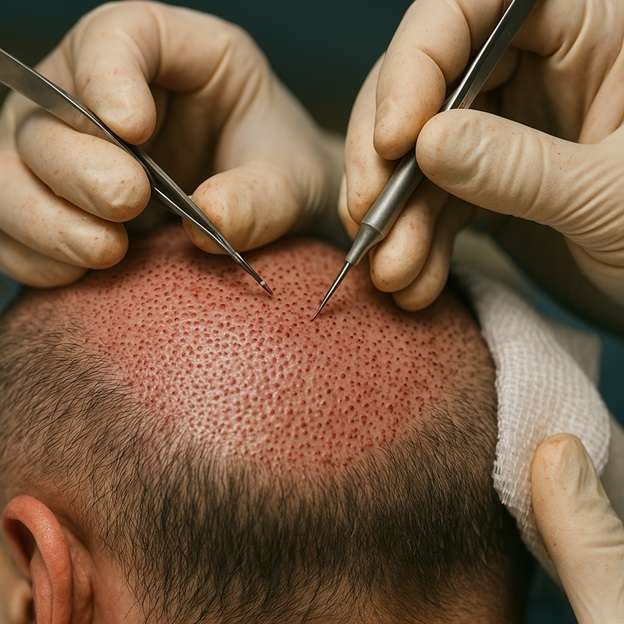
Once the follicles are removed, they are carefully placed into tiny openings in the thinning area. These new hairs will grow naturally over time, just like the rest of your hair. The result is a fuller, more even look that blends well with your existing hair, providing a natural and reassuring outcome.
What Happens During the Procedure
The FUE procedure usually takes one full day, but it’s done in steps to ensure everything goes smoothly and safely.
Step #1: Preoperative Consultation and Planning
During the initial consultation, the medical professional will:
- Evaluate the Patient: A thorough medical and hair loss history is taken along with an assessment of the donor and recipient areas.
- Set Realistic Expectations: The surgeon discusses the anticipated density, the number of grafts required, and the staged nature of hair restoration.
- Plan the Session: A detailed hairline design and distribution design is created based on facial features, hair characteristics, and patient preferences.
Step #2: Anesthesia and Preparation
FUE is typically performed under local anesthesia, ensuring the patient remains comfortable throughout the procedure. Sedation may be offered for particularly anxious patients.
Step #3: Extraction Phase
In this phase:
- Individual Follicle Extraction: The surgeon extracts individual follicular units from the donor site using a specialized micro-punch device.
- Precision Techniques: Modern FUE devices—including robotic assistance in some centers—help extract follicles with minimal damage, preserving the hair’s natural orientation and vitality.
Step #4: Graft Handling and Preparation
After extraction, the follicular units are carefully prepared:
- Sorting and Storage: The grafts are sorted by size and quality and kept in a nutrient-rich solution to maintain viability.
- Microscopic Evaluation: This step ensures that only healthy, viable grafts are implanted.
Step #5: Implantation Phase
The prepared grafts are then transplanted into the recipient area:
- Creating Recipient Sites: Tiny incisions are made in the areas with thinning hair following a preplanned pattern.
- Meticulous Placement: The technician implants the follicular units into these incisions, replicating natural hair angles and density for a seamless appearance.
Why People Choose FUE
There are several reasons why FUE has become a popular choice for hair restoration:
- No Large Scars: FUE doesn’t leave a any scars, unlike older methods. Since each follicle is removed individually, the marks left behind are tiny and nearly invisible, making it easier to wear short hairstyles.
- Quick Recovery: Because FUE is less invasive, the recovery time is much faster than older hair transplant methods. Most people return to their normal activities within a few days. You might experience some redness or swelling, but it usually disappears within a week, providing a sense of relief about the post-procedure period.
- Natural Results: FUE provides a more natural look. Since the procedure uses your hair and places the follicles in a way that mimics natural growth, the results blend well with the rest of your hair.
- Suitable for Different Hair Types: FUE is flexible and works for most people, whether you have curly, straight, or wavy hair. It can treat areas like the scalp, beard, or even eyebrows.
Healing and Hair Growth After FUE
In FUE hair transplant recovery, there are a few things to keep in mind as your hair starts to heal and grow:
- Immediate Aftercare: For the first few days, you’ll need to take care of your scalp by following the aftercare instructions given by your specialist. This may include gentle washing, using specific products, and avoiding sun exposure. After a few days of rest, most people return to work and daily activities.
- The Shedding Phase: The newly transplanted hair may fall out in the weeks following the procedure. This is entirely normal and part of the process. Don’t worry; this is just the hair follicles adjusting before new growth begins.
- Hair Growth Timeline: Hair growth from your transplanted follicles starts three to four months after the procedure. Full results typically show after 12 to 18 months as the new hair grows thicker and fuller. Patience is key during this period.
- Supporting Recovery: To help the healing process, avoid heavy exercise for a couple of weeks and follow the advice of your specialist. You might also be given medications or topical treatments to speed up recovery and improve hair growth.
Who Can Get FUE?
FUE hair transplant is a flexible procedure, but it’s not for everyone. Here’s what makes someone a good candidate:
- Suitable for Both Men and Women: FUE works well for men and women with hair loss. It’s especially effective for people with male pattern baldness or thinning hair, as long as they have enough healthy hair in the donor areas.
- Healthy Scalp: A healthy scalp is important. If you have scalp conditions or infections, they need to be treated before undergoing FUE.
- Good Hair Density in Donor Areas: You need enough hair in the donor areas (usually the back or sides of your head) for the procedure. Other treatment options may be considered if you don’t have enough hair there.
- Realistic Expectations: FUE Hair transplant is an excellent solution for many, but it’s essential to have realistic expectations about the results. It won’t give you an entirely new head of hair overnight, but it can restore a fuller look with time.
If you’re unsure whether FUE is right for you, consult a specialist to discuss your options and determine what would work best for your unique hair type and situation.
Final Thoughts
FUE Hair Transplant is a modern, effective solution for restoring hair. It offers a natural look, minimal recovery time, and no visible scars, making it an ideal choice for many people experiencing hair loss. Whether you’re looking to restore a receding hairline or thicken thinning areas, FUE hair transplant benefits could help bring back your confidence.
If you’re considering FUE Hair Transplant, the next best step is to speak with a qualified specialist who can evaluate your needs and help you understand what to expect from the procedure. With the proper guidance, FUE can offer long-lasting results and boost your appearance.
References
Palmbeach. (2024, August 22). Hair restoration in West Palm Beach. Palm Beach Advanced Aesthetics. https://pbaaesthetics.com/hair-restoration/
FUE What to expect: An Ultimate Guide to FUE procedure – Hair Transplant Clinic Toronto. (2025, March 31). Hair Transplant Clinic Toronto. https://www.hairtransplantclinictoronto.com/what-to-expect-before-and-after-fue-procedure/
Transplant, H. (2024, August 3). Understanding FUE Hair transplant: Procedure and benefits – Hair transplant. Hair Transplant. https://www.hairtransplantglobal.com/understanding-fue-hair-transplant-procedure-and-benefits/