
Grow Young With Us
Being told you need a knee replacement is not the same as needing one today. The question worth asking first is which stage you are actually at.
Quick Answer
The main alternatives to knee replacement surgery in Denver are regenerative injections (stem cell and PRP), peptide therapy, shockwave therapy, and structured physical therapy with weight and load management. These are most realistic for mild to moderate osteoarthritis and soft-tissue injury; advanced bone-on-bone arthritis with deformity and rest pain usually still points to surgery. Beyond Stem Cells evaluates candidacy at a free consultation in Littleton, serving the Denver metro. Call 1-833-720-7836.
- Stage decides everything. Early and moderate arthritis have real non-surgical options; end-stage arthritis usually does not.
- Non-surgical options include stem cell and PRP injections, peptide therapy, shockwave, and loading programs.
- Recovery differs enormously: injections are minimal-downtime; a replacement is months of rehab.
- Non-surgical care is paid out of pocket; a replacement is usually insured but carries its own out-of-pocket exposure.
- Delaying surgery is a legitimate goal — younger patients may prefer to avoid a revision surgery later in life.
- Red flags — locking, giving way, rest pain, deformity — mean imaging and a surgical opinion, not another injection.
Free consultation
Same-day consults available
Littleton, CO · serving Denver
When a Knee Replacement Is and Isn’t Necessary
A knee replacement becomes the reasonable choice when the joint surface is gone and the pain no longer responds to anything conservative — not simply when an X-ray looks bad. Imaging and symptoms correlate loosely; plenty of people have unimpressive X-rays and severe pain, and vice versa.
Signs that point toward surgery:
- Bone-on-bone changes with pain at rest or at night
- Progressive deformity or instability
- Function that has narrowed to the point of limiting daily life
- An honest trial of conservative care that failed
Signs that a non-surgical trial is reasonable first:
- Pain that is activity-related and settles with rest
- Mild to moderate arthritic change
- Soft-tissue contributors — tendon, ligament, or meniscal irritation
- You are younger than the typical replacement age and want to postpone the clock on a future revision
Peptide Therapy for Joint Pain in Littleton, Colorado
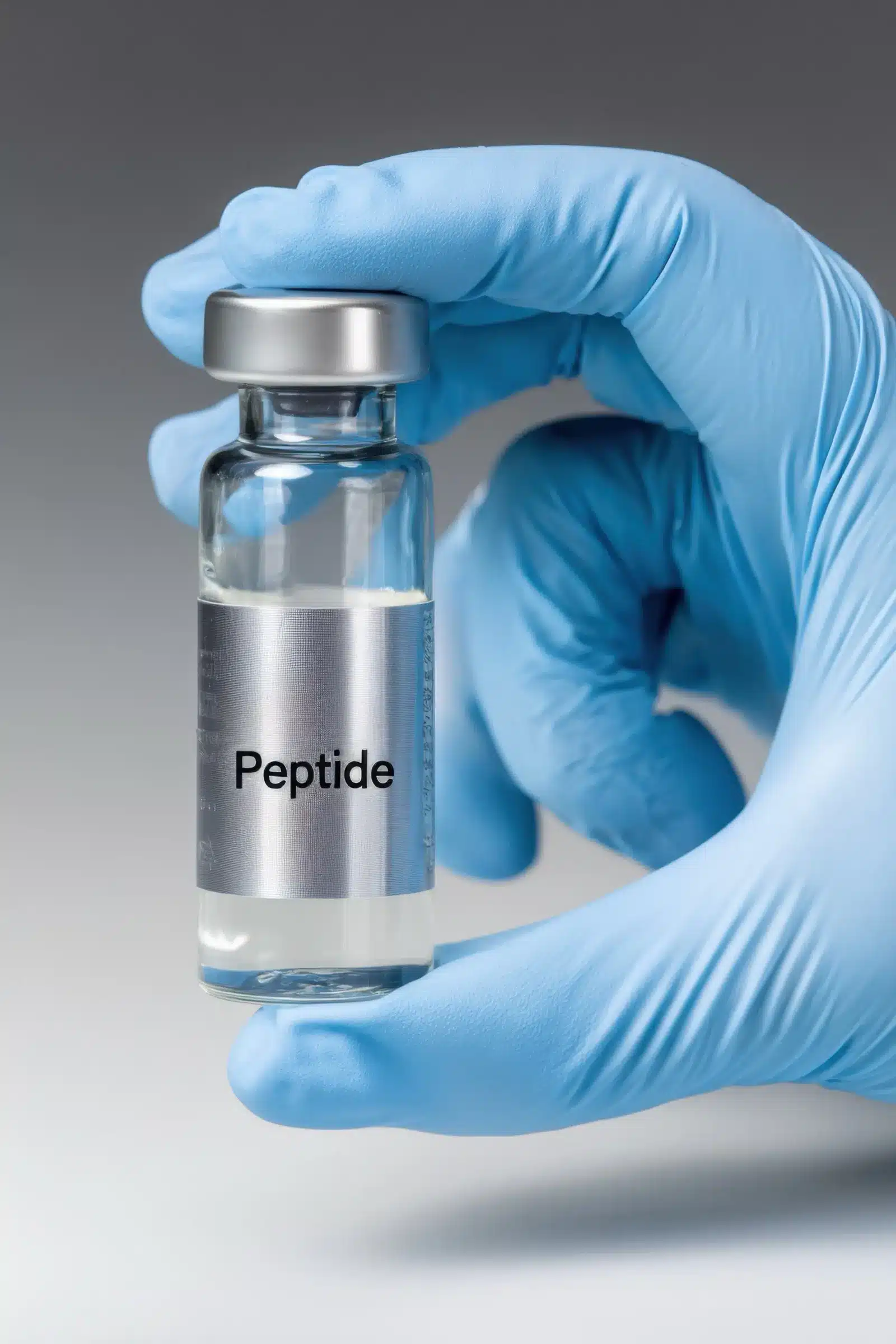
Peptide therapy is used to support the soft-tissue side of knee pain — tendon, ligament and inflammatory contributors — rather than to rebuild a joint surface. At our Littleton clinic that most often means BPC-157, frequently paired with TB-500.
Set expectations honestly: this is a weeks-to-months process, the human evidence base is limited, and these are compounded, non-FDA-approved substances used under physician supervision. Our detailed write-up of BPC-157 injection for knee pain covers the mechanism, dosing shape and what the research does and does not show.
Stem Cell and PRP Injections for Knee Osteoarthritis
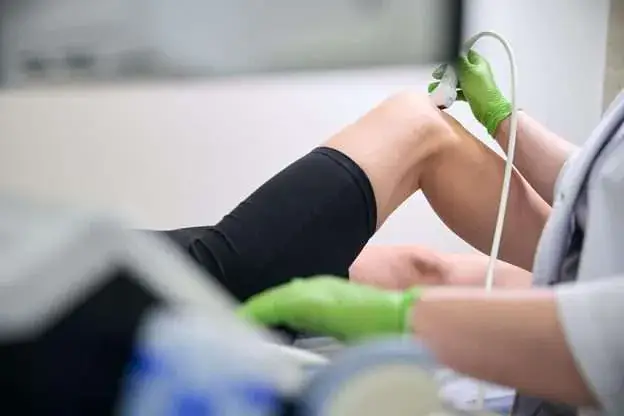
Regenerative injections aim to change the biological environment inside and around the joint rather than replace the joint. PRP concentrates your own platelets and growth factors; stem cell approaches introduce cells whose signaling influences surrounding tissue.
| Option | Best suited to | Typical downtime | Insurance |
|---|---|---|---|
| PRP injection | Mild–moderate OA, tendon involvement | Days | Rarely covered |
| Stem cell injection | Moderate OA, meniscal and ligament involvement | Days | Rarely covered |
| Peptide course | Soft-tissue and inflammatory contributors | None | Not covered |
| Shockwave therapy | Tendinopathy around the joint | None | Rarely covered |
| Knee replacement | End-stage arthritis | Months | Usually covered when criteria met |
Beyond Stem Cells reports that most patients see gradual improvement at 4–12 weeks following stem cell treatment for knee pain, that results often last 2–5 years or longer, and that most need a single session — with the clinic’s own caveat that earlier intervention tends to do better. Full detail is in our stem cell therapy for knee pain in Denver guide.
Recovery Time Compared to Surgery
This is the difference most patients feel first. A regenerative injection is an office procedure under local anesthesia; a total knee replacement is major surgery with a structured rehabilitation course measured in months.
| Milestone | Regenerative injection | Total knee replacement |
|---|---|---|
| Procedure setting | Office, local anesthesia | Hospital or surgical center |
| Back to desk work | Typically next day | Commonly several weeks |
| Formal rehab | Optional, activity-guided | Required, months |
| Full benefit realized | Gradual, 4–12 weeks | Commonly 6–12 months |
| Reversibility | Nothing is removed | Permanent; revisions are harder |
Cost of Non-Surgical Treatment vs a Replacement
Compare total exposure, not sticker price. Non-surgical regenerative care is paid out of pocket. A knee replacement is typically covered when criteria are met — but “covered” still means deductible, coinsurance, facility and anesthesia charges, rehab visits, and time away from work.
The honest comparison also includes what each buys. Surgery, for the right candidate, is definitive. Regenerative care, for the right candidate, is symptom and function improvement that may need repeating. Our breakdown of does insurance cover stem cell therapy for knees covers the coverage question, HSA/FSA use, and financing in full.
Who Is and Isn’t a Candidate
Good candidates for non-surgical knee care generally have:
- Mild to moderate osteoarthritis, or a soft-tissue diagnosis
- Pain that varies with activity rather than constant rest pain
- Reasonable alignment and stability
- Willingness to pay out of pocket and to give it 8–12 weeks
Poor candidates — where we will say so:
- End-stage bone-on-bone arthritis with deformity
- Mechanical locking or a knee that gives way
- Active joint infection or an active cancer diagnosis
- Anyone expecting a permanent structural fix from an injection
Frequently Asked Questions
What are the alternatives to knee replacement surgery in Denver?
The main options are stem cell and PRP injections, peptide therapy, shockwave therapy for tendon involvement, and structured physical therapy with load and weight management. Beyond Stem Cells offers these from its Littleton clinic serving the Denver metro.
Can I avoid a knee replacement entirely?
Sometimes, depending on stage. Mild to moderate arthritis often responds to non-surgical care. Advanced bone-on-bone arthritis with deformity or rest pain generally still points toward surgery, and delaying in that situation may not serve you.
How long does recovery take compared to surgery?
Regenerative injections are office procedures with minimal downtime and gradual improvement typically over 4 to 12 weeks. A total knee replacement generally involves months of structured rehabilitation, with full benefit commonly at 6 to 12 months.
Is non-surgical knee treatment covered by insurance?
Usually not. Stem cell and PRP injections for knee osteoarthritis are typically classified as investigational and denied. A knee replacement is usually covered when medical criteria are met.
Who is not a candidate for non-surgical knee treatment?
Patients with end-stage arthritis and deformity, mechanical locking or instability, active joint infection, or an active cancer diagnosis. Anyone expecting an injection to restore lost cartilage structurally is also not a good fit.
Find Out Which Stage You’re Actually At
Free consultation in Littleton, serving Denver, Englewood, Centennial, Highlands Ranch and Lakewood.
Call 1-833-720-7836 (24/7) · Book a free consultation
5912 S Cody St Suite 201, Littleton, CO 80123 · Mon–Sat 9:00 AM–5:00 PM MST
Find us on Google Maps
Medical disclaimer: Stem cell and PRP injections are not FDA-approved for knee osteoarthritis. Candidacy and outcomes vary; imaging and clinical examination are required before any treatment decision. This article is educational and is not medical advice. Individual results vary and no outcome is guaranteed. Always consult a licensed physician about your own situation. Prices shown are current as of August 14, 2026 and are subject to change.