
Grow Young With Us
The peptide people ask about most, applied to the joint people hurt in most. Here is what is genuinely supported, what is extrapolated from animal work, and what I tell patients in the room.
Quick Answer
A BPC-157 injection for knee pain is used to support soft-tissue repair and calm inflammation around the joint, and many patients report meaningful relief — but the evidence base is largely preclinical, and BPC-157 is not an FDA-approved drug. At Beyond Stem Cells it is prescribed under physician supervision, usually as a several-week course rather than a single shot, with vials running $199–$599. It is not a substitute for a diagnosis. Call 1-833-720-7836.
- BPC-157 is used for tendon, ligament and soft-tissue healing around the knee — not as a cartilage regrowth treatment.
- The human evidence is thin; most of the encouraging data is animal research on tendon and ligament repair.
- It is commonly stacked with TB-500, which acts more systemically — the pairing patients call the Wolverine protocol.
- Expect a multi-week course, not a one-shot fix. Timelines are measured in weeks to months.
- Unlike cortisone, it is not designed to shut down inflammation fast — different tool, different job.
- Vials run $199–$599; the monthly total depends on the protocol set at your consult.
Vials $199–$599
Individualized dosing
Littleton, CO · serving Denver
How BPC-157 Behaves Inside a Joint
BPC-157’s proposed mechanism is to increase blood supply to damaged tissue and modulate the healing response — which is why it is aimed at the soft tissue around a knee rather than at the joint surface itself. The peptide is thought to promote angiogenesis, the formation of new blood vessels, and to influence growth factor signaling in tendon and ligament tissue.
That matters for the knee specifically, because knee pain is rarely one problem. Tendon and ligament tissue have famously poor blood supply, which is exactly why they heal slowly. A treatment that plausibly improves perfusion to those structures is aimed at the actual bottleneck. Cartilage is a different story — it is avascular and largely aneural, and no peptide should be sold to you as cartilage regrowth.
What the Intra-Articular Research Shows
Be direct about this: most published BPC-157 research is animal work, and intra-articular human trials are essentially absent. The body of evidence people cite consists largely of rodent studies on tendon-to-bone healing, ligament repair, muscle injury and gut protection, with consistently positive directional findings.
What that supports is a reasonable hypothesis and a lot of clinical observation. What it does not support is a claim about response rates, or an assertion that it outperforms established treatments. Anyone quoting you a success percentage for BPC-157 in knees is quoting something that has not been measured.
BPC-157 and TB-500 for Joint Pain: Why They’re Stacked
The two are combined because they work at different scales: BPC-157 is used for localized repair, while TB-500 influences cell migration and systemic healing. Pairing them is common enough at our clinic and elsewhere that it has a nickname — the Wolverine protocol.
| BPC-157 | TB-500 | |
|---|---|---|
| Primary action | Local tissue repair, angiogenesis | Cell migration, systemic healing |
| Typical target | A specific injured structure | Whole-body recovery load |
| Used alone when | One clear localized injury | Diffuse or multi-site recovery |
If the goal includes skin and collagen alongside joint recovery, the GLOW blend folds GHK-Cu into the same pairing; pricing for that blend is covered in our glow peptide cost breakdown.
Dosing Schedule and Realistic Timeline
Dosing is individualized and set at consultation — there is no standard published human dose, and anyone handing you a universal protocol is guessing. What is consistent is the shape of the course:
- Weeks 1–2: loading phase. Most patients report little or nothing yet. This is the phase people quit in.
- Weeks 3–4: the window where change is most commonly first noticed — usually as reduced ache after activity rather than a dramatic shift.
- Weeks 4–8: the assessment point. Function, not just pain, is what should be re-measured here.
- Beyond 8 weeks: continue, taper, or change approach based on that assessment — not on hope.
Beyond Stem Cells prefers injections over oral forms for absorption. Whether that injection is subcutaneous near the area or delivered another way is a clinical decision made at your visit.
BPC-157 vs a Cortisone Shot
They are not competitors; they solve different problems on different clocks. A cortisone injection is a fast, powerful anti-inflammatory with a well-documented track record and well-documented limits — including cartilage and tendon concerns with repeated use. A peptide course is slower and aimed at the repair process itself.
| BPC-157 course | Cortisone injection | |
|---|---|---|
| Onset | Weeks | Days |
| Goal | Support tissue healing | Suppress inflammation |
| Evidence base | Mostly preclinical | Extensive human data |
| FDA status | Not FDA-approved; compounded | FDA-approved |
| Repeat-use concern | Long-term data lacking | Limits on injection frequency |
The honest framing: if you need to function next week, cortisone has an answer peptides do not. If you have been managing a nagging soft-tissue problem for months and want to address the healing side, that is where this conversation belongs.
Cartilage, Meniscus, and Ligament Cases
Case selection is what separates a reasonable trial from wasted money. Broadly:
- Ligament and tendon irritation: the most plausible case for a peptide course, given where the preclinical data sits.
- Degenerative meniscal changes: sometimes managed non-surgically alongside other measures — peptides are supportive at best, not corrective.
- Advanced cartilage loss / bone-on-bone arthritis: a structural problem. This is where joint regeneration options and, honestly, a surgical conversation belong.
- Acute locking, giving way, or inability to bear weight: get imaged. Do not start a peptide course instead of a diagnosis.
Cost and Financing
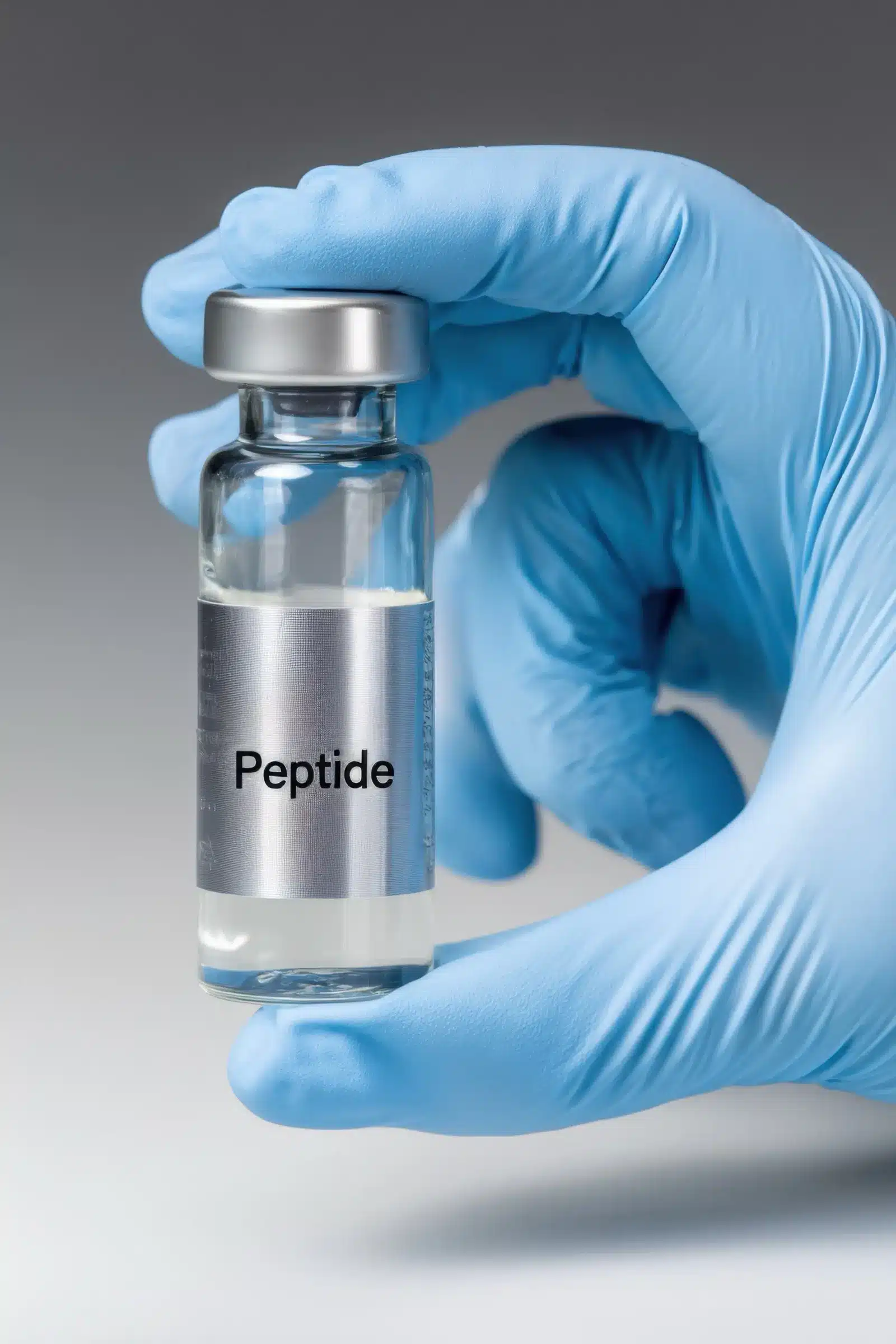
BPC-157 vials run $199–$599 at Beyond Stem Cells, priced by vial size and concentration. Because dosing is individualized, your monthly cost is quoted after your protocol is set — not before. New-patient credits of $500 apply to regenerative treatment, and 0% interest plans are available for qualified candidates.
— John Comandari, on BPC-157
Frequently Asked Questions
Does a BPC-157 injection work for knee pain?
Many patients report reduced pain and improved function, but the published evidence is largely preclinical animal research rather than human trials. BPC-157 is not FDA-approved, and no verified success rate exists for knee pain specifically.
Is BPC-157 injected directly into the knee joint?
Administration route is a clinical decision made at consultation. Beyond Stem Cells prefers injection over oral forms for absorption. Intra-articular human research on BPC-157 is essentially absent, so route decisions are made case by case under physician supervision.
How long does BPC-157 take to work for knee pain?
Most patients notice change, if any, around weeks three to four, with a formal reassessment at four to eight weeks. The first two weeks commonly produce nothing noticeable.
Is BPC-157 better than a cortisone shot?
They do different jobs. Cortisone suppresses inflammation quickly and has extensive human data; a BPC-157 course is slower and aimed at supporting tissue repair, with a mostly preclinical evidence base. Neither replaces a diagnosis.
How much does BPC-157 cost?
Vials run $199 to $599 at Beyond Stem Cells depending on size and concentration. Monthly cost depends on the dosing protocol set at your consultation.
Find Out Whether Your Knee Is a Candidate
A consultation starts with what is actually wrong with the joint — then what, if anything, a peptide course adds.
Call 1-833-720-7836 (24/7) · Book a free consultation
5912 S Cody St Suite 201, Littleton, CO 80123 · Mon–Sat 9:00 AM–5:00 PM MST
Find us on Google Maps
Medical disclaimer: BPC-157 and TB-500 are not FDA-approved drugs; they are compounded substances used off-label under physician supervision. Most supporting research is preclinical. This article is educational and is not medical advice. Individual results vary and no outcome is guaranteed. Always consult a licensed physician about your own situation. Prices shown are current as of August 14, 2026 and are subject to change.