
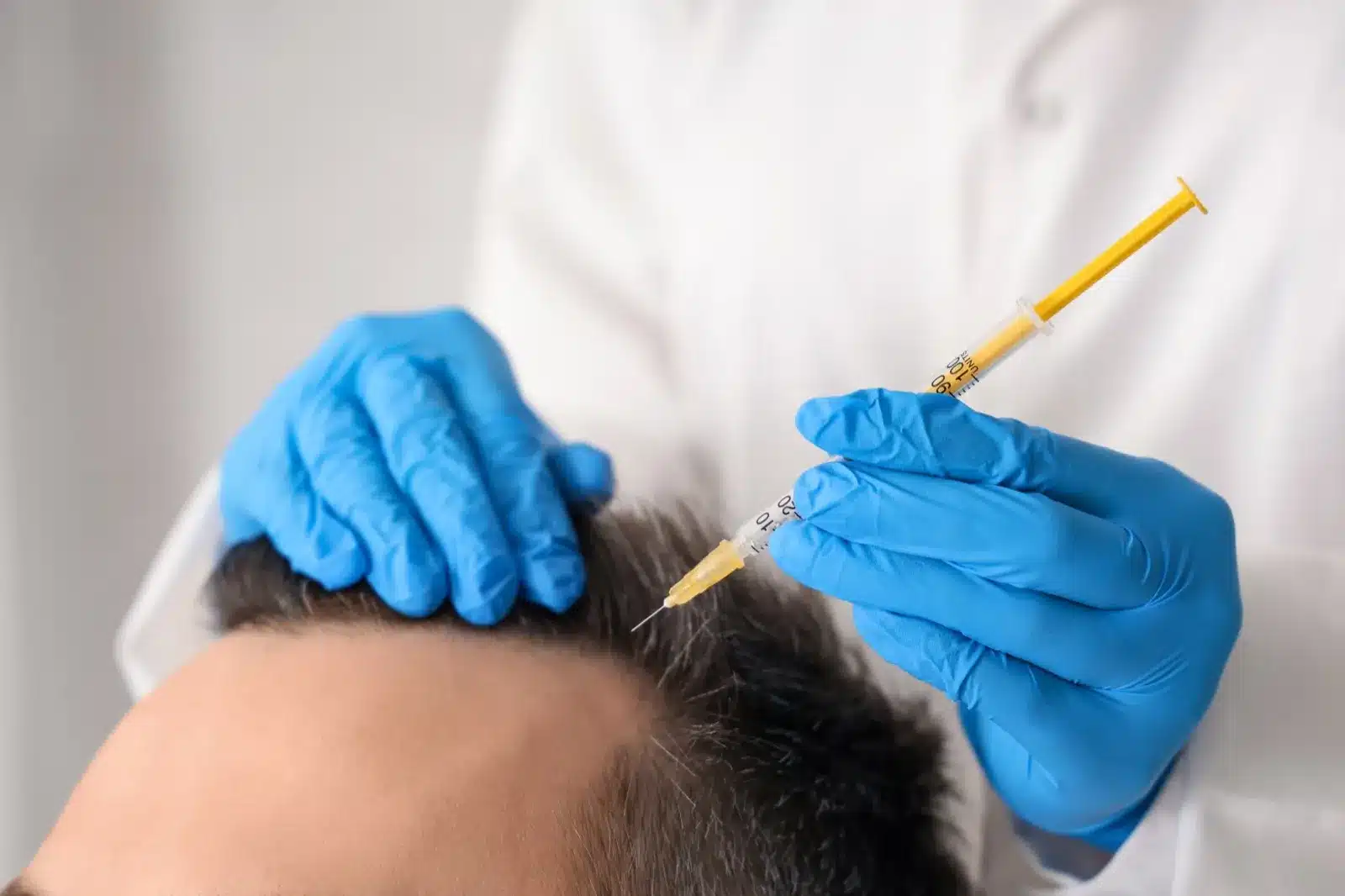
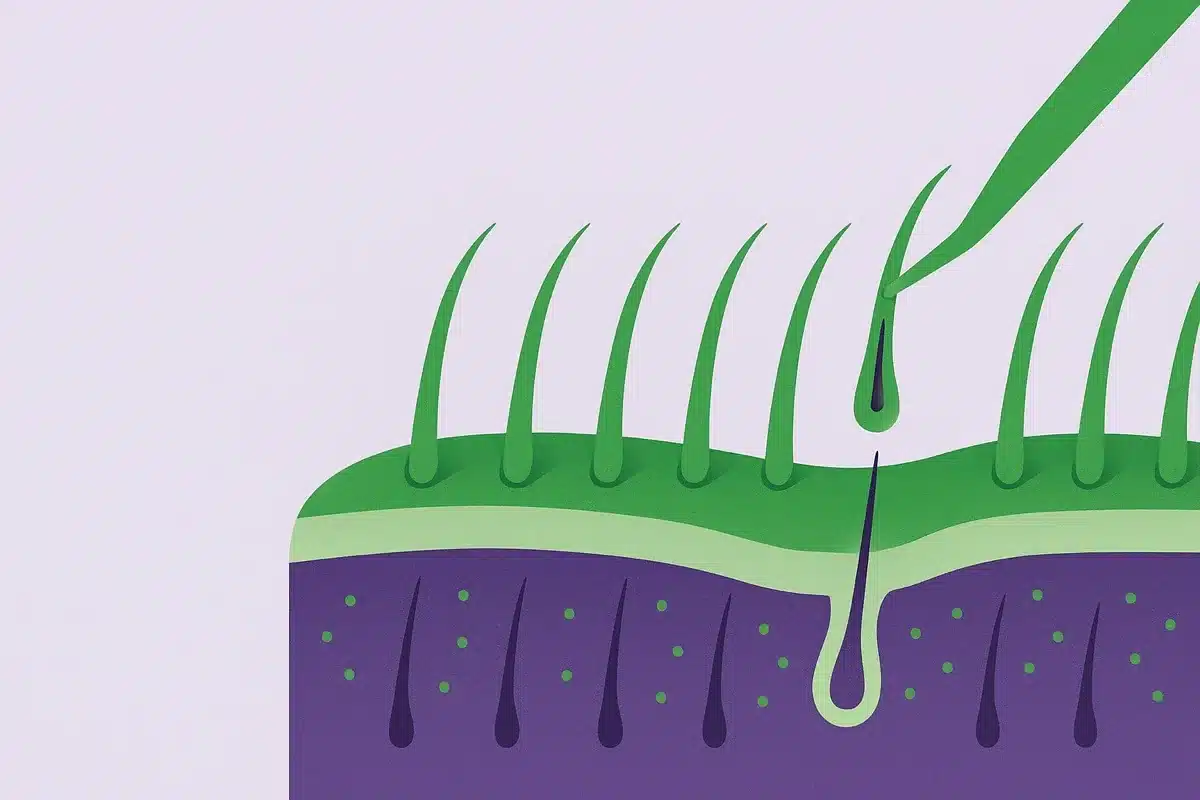
PRP therapy at Beyond Stem Cells in Littleton, CO is an injection prepared from a small sample of your own blood, concentrated so it carries more platelets than normal blood. The clinic uses PRP for selected joint, tendon and ligament problems and for scalp-based hair restoration, after a free consultation confirms that PRP fits your diagnosis.
A PRP joint treatment costs $1,500, or four treatments for $5,000. PRP may help some patients, results vary, and no outcome is promised.
What is PRP therapy?
PRP therapy, short for platelet-rich plasma therapy, uses a concentrate of platelets drawn from the patient's own blood. Platelets are best known for clotting, but they also carry growth factors, proteins involved in tissue repair and inflammation. A PRP injection places that concentrate at an injured or painful site with the aim of supporting the body's own healing response.
Because PRP is autologous, meaning it comes from you, it is a different material from the donor-derived stem cells and exosome products also offered at the clinic. Evidence for one of these preparations does not prove anything about the others, so each one deserves its own discussion. The American Academy of Orthopaedic Surgeons' patient overview of PRP notes that results depend on the condition being treated.
Gallery
Inside regenerative care

What is PRP used for at Beyond Stem Cells?
PRP at Beyond Stem Cells is used for selected musculoskeletal and hair concerns rather than as a general wellness injection. The clinic's own pages describe PRP for mild tendon injuries, tendon or ligament strain, early joint inflammation, early-stage arthritis, sports-related soft tissue injuries and thinning hair. A physician-supervised evaluation decides whether PRP suits your specific diagnosis.
- Knees: PRP is one of the non-surgical options discussed for osteoarthritis, meniscus tears, ligament injuries, tendonitis, bursitis and chondromalacia. See knee pain treatment.
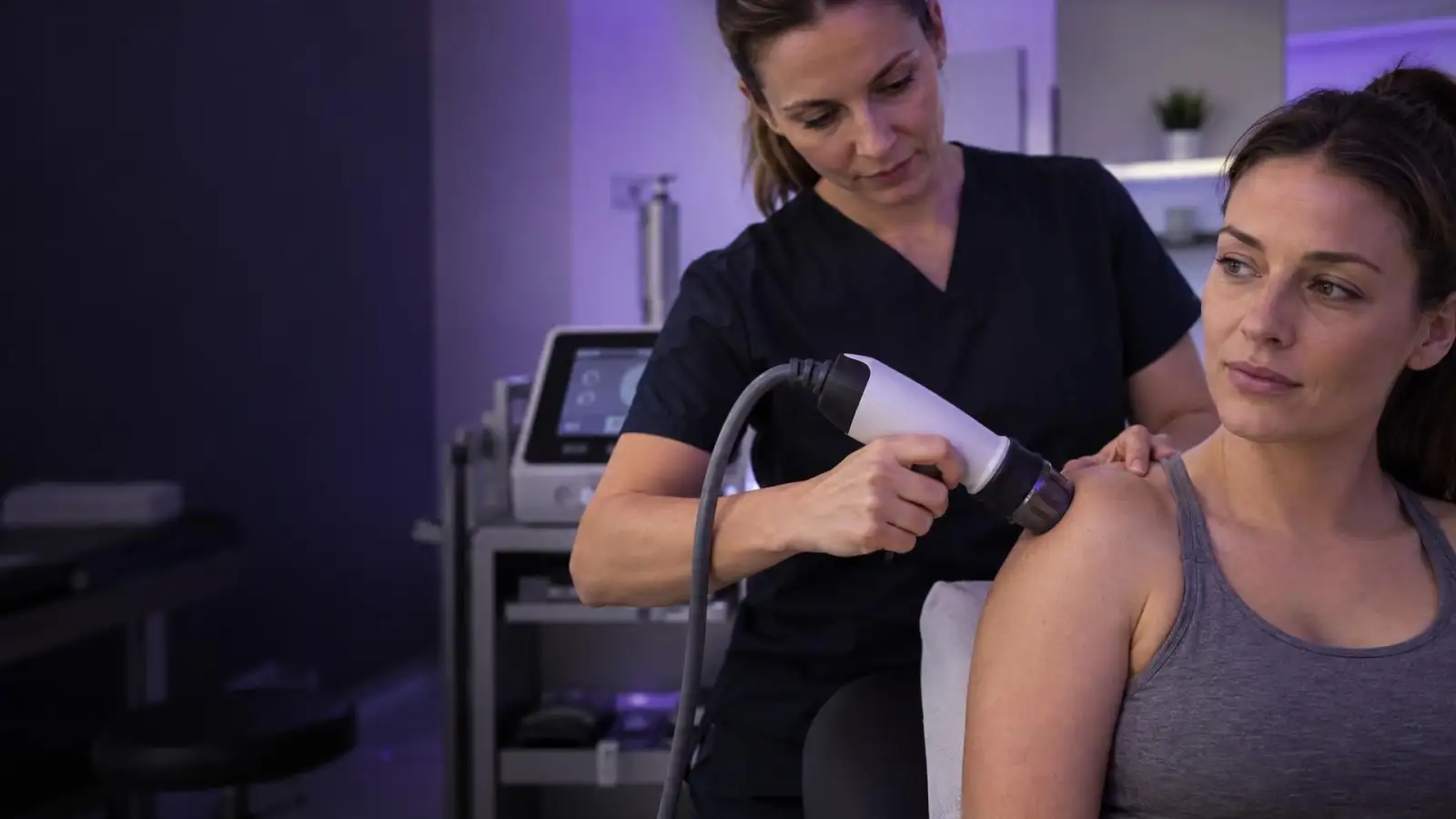
- Shoulders: PRP may be considered for chronic partial rotator cuff tears, tendinopathy and impingement when conservative care has not been enough.
- Elbows: tennis elbow (lateral epicondylitis) is a common reason patients ask about PRP.
- Tendons and ligaments: see PRP for tendon and ligament injuries for how PRP is used for soft tissue problems.
- Hair: scalp PRP is one of the options compared at a hair restoration consultation, alongside medication and FUE.
The clinic also offers PRP-based sexual wellness procedures (the P-Shot and O-Shot), which the clinic's service page notes Cleveland Clinic describes as experimental. Beyond Stem Cells does not treat spine conditions.
How does a PRP visit work?
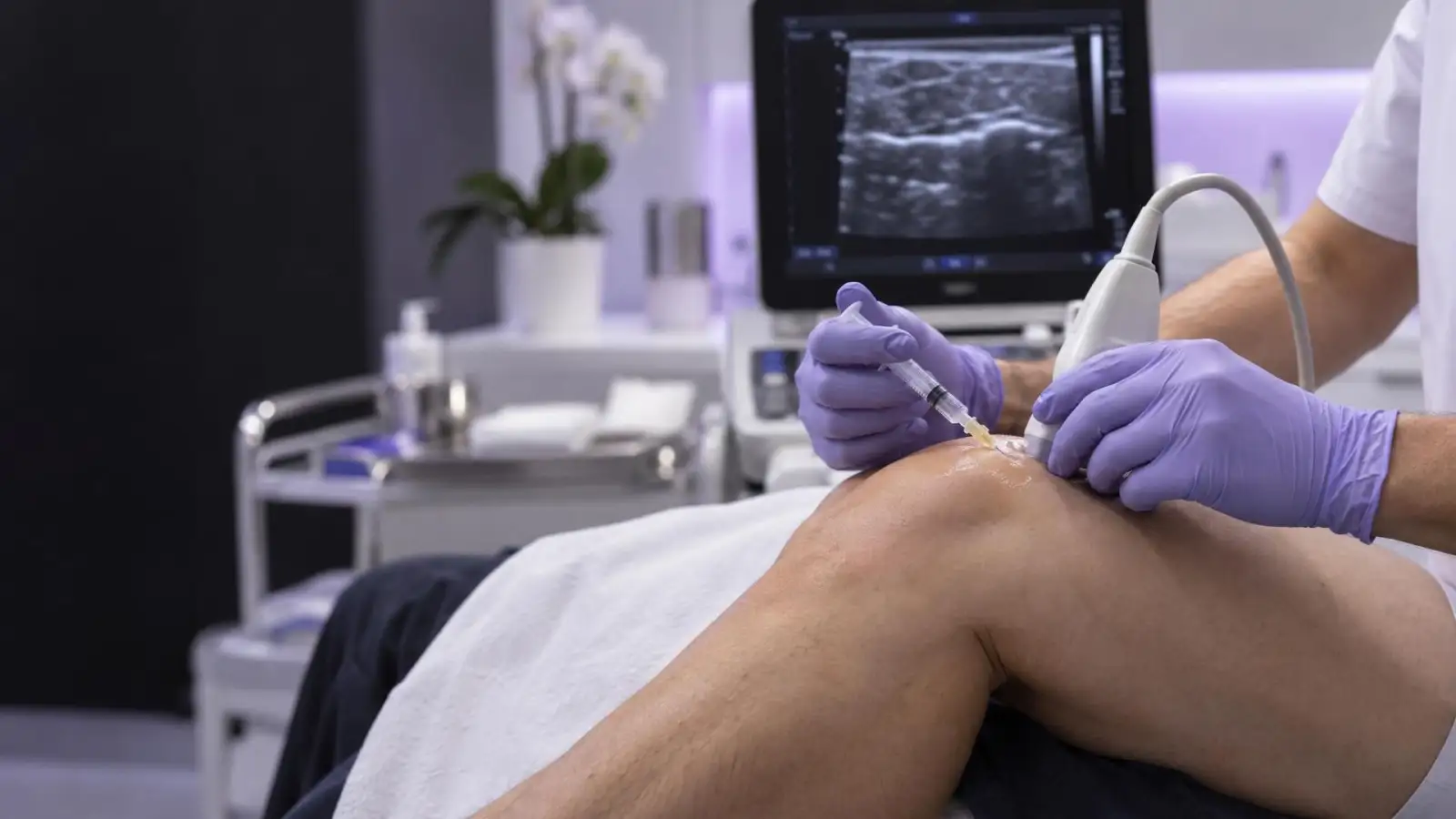
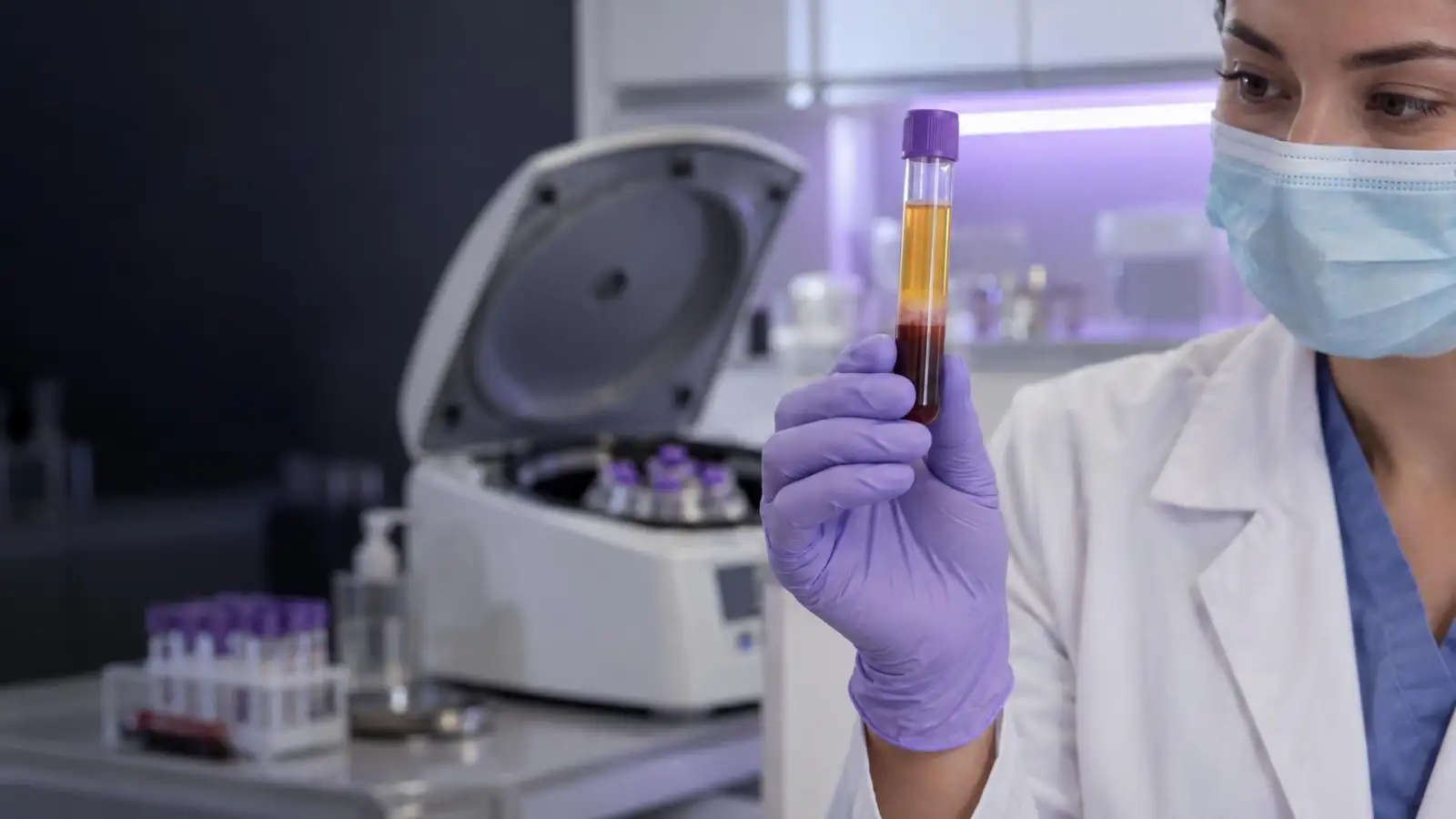
A PRP visit at Beyond Stem Cells is an outpatient procedure that starts with a blood draw and ends with an injection at the treatment site, usually with same-day discharge. The blood is spun in a centrifuge to separate and concentrate the platelet-rich plasma. The area is numbed with local anesthetic before the injection, and knee injections are image-guided.
- Free consultation. Bring your medical history, medication list, X-ray or MRI reports and images, and your questions. The medical director approves every plan before anything is scheduled.
- Blood draw and preparation. A small blood sample is processed in a centrifuge to produce the PRP.
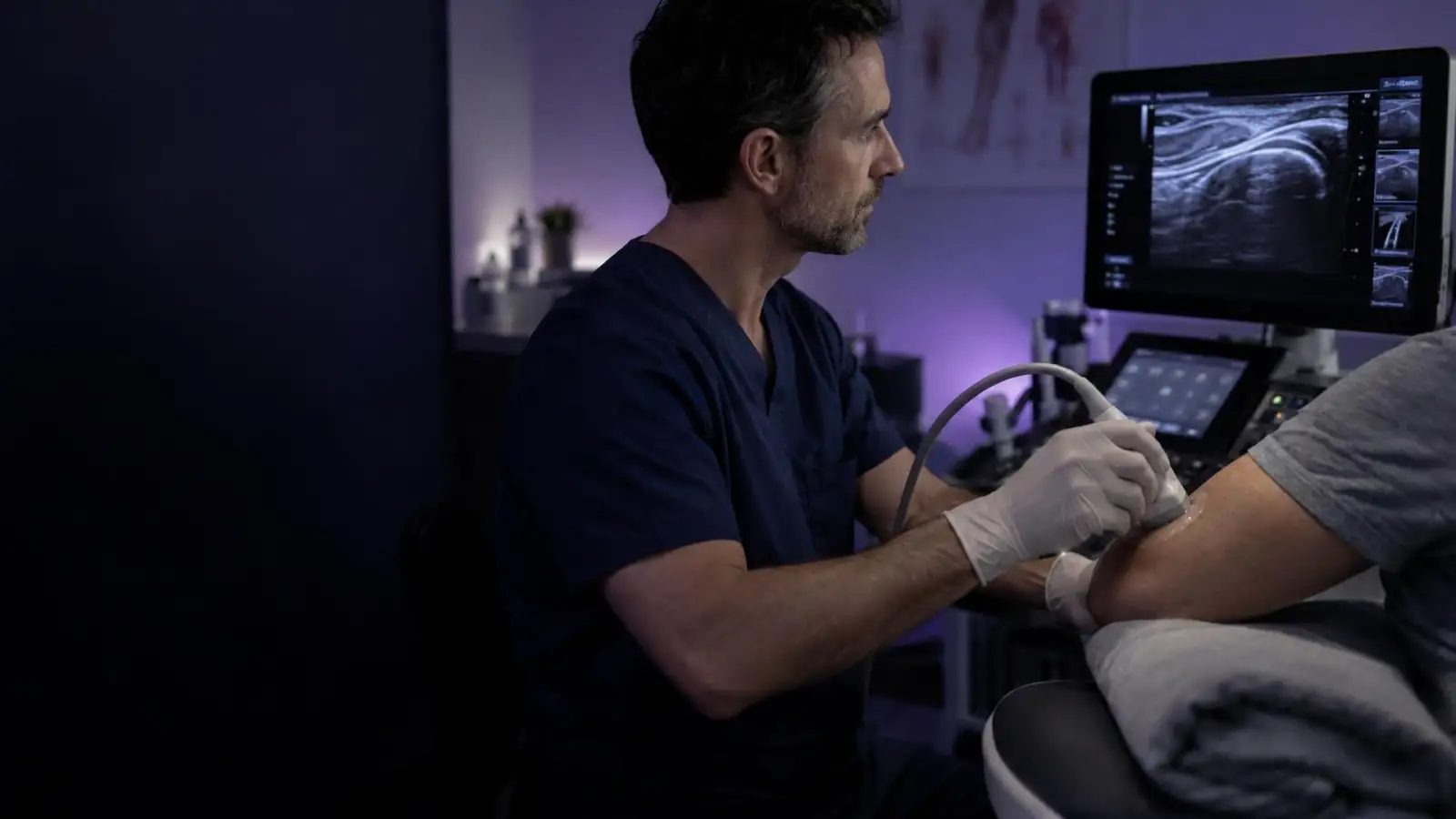
- Guided injection. The clinic uses ultrasound or fluoroscopic guidance for knee injections, and ultrasound guidance is described for tendon injections such as tennis elbow. Ask how your own injection will be guided.
- Short observation. Patients typically stay briefly so the team can watch for any immediate reaction, then go home the same day.
- Aftercare. Expect detailed instructions on rest, controlled movement and rehabilitation, with limits on heavy lifting and strenuous activity for a period.
What should you expect after a PRP injection?
After a PRP injection, mild soreness, swelling or tenderness around the injection site for several days is expected. Improvement with PRP is gradual. The clinic's knee information describes improvement that typically begins within a few weeks and continues over 3 to 6 months, and many PRP plans use more than one session. Individual results vary, and some patients do not respond.
Any injection carries procedure-specific risks such as pain, infection or bleeding, which your clinician reviews with you before consent. A disappointing response should lead to reassessment, not an automatic purchase of more sessions.
How much does PRP cost in Littleton, CO?
PRP for a joint at Beyond Stem Cells in Littleton, CO costs $1,500 per treatment, the same price as a stem cell or exosome joint treatment. A package of four treatments is $5,000, a $1,000 saving, and the four can be split across different joints. Hair PRP and other non-joint PRP procedures are priced at the free consultation.
- One treatment means one joint. Two knees on the same day are two treatments.
- Shockwave and red-light therapy are usually bundled with joint treatments at no extra cost, and package buyers can use red-light therapy without limit.
- Insurance and Medicare do not cover PRP for joints. HSA and FSA funds are accepted, and financing is available.
The full price list and a cost calculator are on the PRP and stem cell cost page. Your written treatment plan is the controlling quote.
Physician-guided regenerative medicine
in Littleton, Colorado
- 4.9★Google rating
- 170Google reviews
- 6 daysOpen Monday–Saturday
- 48Hours open each week
PRP vs stem cell vs exosome therapy: how do they compare?
PRP, stem cell therapy and exosome therapy are three different regenerative preparations with different sources, evidence and regulatory questions. PRP comes from your own blood. Beyond Stem Cells' stem cells are donor-derived mesenchymal stem cells from donated umbilical cord and placental tissue. Exosomes are a separate product category. At the clinic, all three cost $1,500 per joint treatment.
| Factor | PRP | Stem cell (donor MSC) | Exosome |
|---|---|---|---|
| Source | Your own blood, concentrated by centrifuge | Donated umbilical cord and placental tissue | A separate product category, made from cultured placental stem cells |
| Often discussed for | Mild tendon injuries, ligament strain, early joint inflammation, early arthritis | Moderate arthritis, chronic joint degeneration, cartilage damage, or when PRP was not enough | Recovery support as part of an individualized plan |
| Evidence | Somewhat stronger evidence base than cell-based therapy, though results vary | Developing; published studies are mostly small with short follow-up | Developing; ask for product-specific evidence |
| FDA status | No PRP product is FDA-approved to treat joint pain | Not FDA-approved for orthopedic conditions; ask about the FDA pathway | FDA states there are no FDA-approved exosome products |
| Price per joint treatment | $1,500 | $1,500 | $1,500 |
The medical director chooses the procedure that fits the joint, and the price does not change with that choice. For a deeper comparison, read stem cell therapy vs PRP.
Who may not be a good candidate for PRP?
PRP may not be the right choice for everyone, and Beyond Stem Cells says so at the consultation when a patient is unlikely to benefit. Regenerative injections are often not appropriate for advanced cartilage loss with bone-on-bone contact, an active joint infection, a joint that is mechanically unstable and needs surgical repair, or a patient looking for a guaranteed outcome.
The clinic also notes that structured physical therapy is often the right first step if you have not tried it yet. A suddenly hot, swollen joint with fever, or an injury that stops you from using the limb, needs prompt medical assessment rather than an elective consultation. Severity of damage, how long symptoms have lasted, age, overall health and commitment to rehabilitation all affect how well PRP may work.
PRP therapy: frequently asked questions
Is PRP FDA-approved for joint pain?
No. No stem cell or PRP product is FDA-approved to treat joint pain, which is also why insurance does not cover these injections. Your clinician can explain the evidence for PRP for your specific condition.
How many PRP sessions will I need?
The number depends on your diagnosis and how you respond. Many PRP plans use more than one session, and the medical director sets and approves the plan after your exam and imaging.
Does PRP hurt?
The area is numbed with local anesthetic before the injection. Mild soreness, swelling or tenderness for several days afterward is expected and is part of the normal response.
How much does hair PRP cost?
Hair PRP is priced at the free consultation, because the plan depends on the cause and pattern of your hair loss. Joint PRP is $1,500 per treatment or four for $5,000.
Can PRP help me avoid surgery?
Some patients explore PRP before considering surgery, but PRP cannot be promised to replace an operation. If imaging shows a problem that needs surgical repair, the clinic will tell you.
What should I bring to my PRP consultation?
Bring your recent medical history, a list of current medications, X-ray or MRI reports and images, any prior treatment records, and your questions.
Medically reviewed by Dr. Michael Iannotti, MD · Updated