
Grow Young With Us
GLOW Peptide Blend Results: Real Patient Stories on Skin, Joints & Hair Recovery
Four patients, four different goals — and one peptide blend they all have in common.
Quick Answer
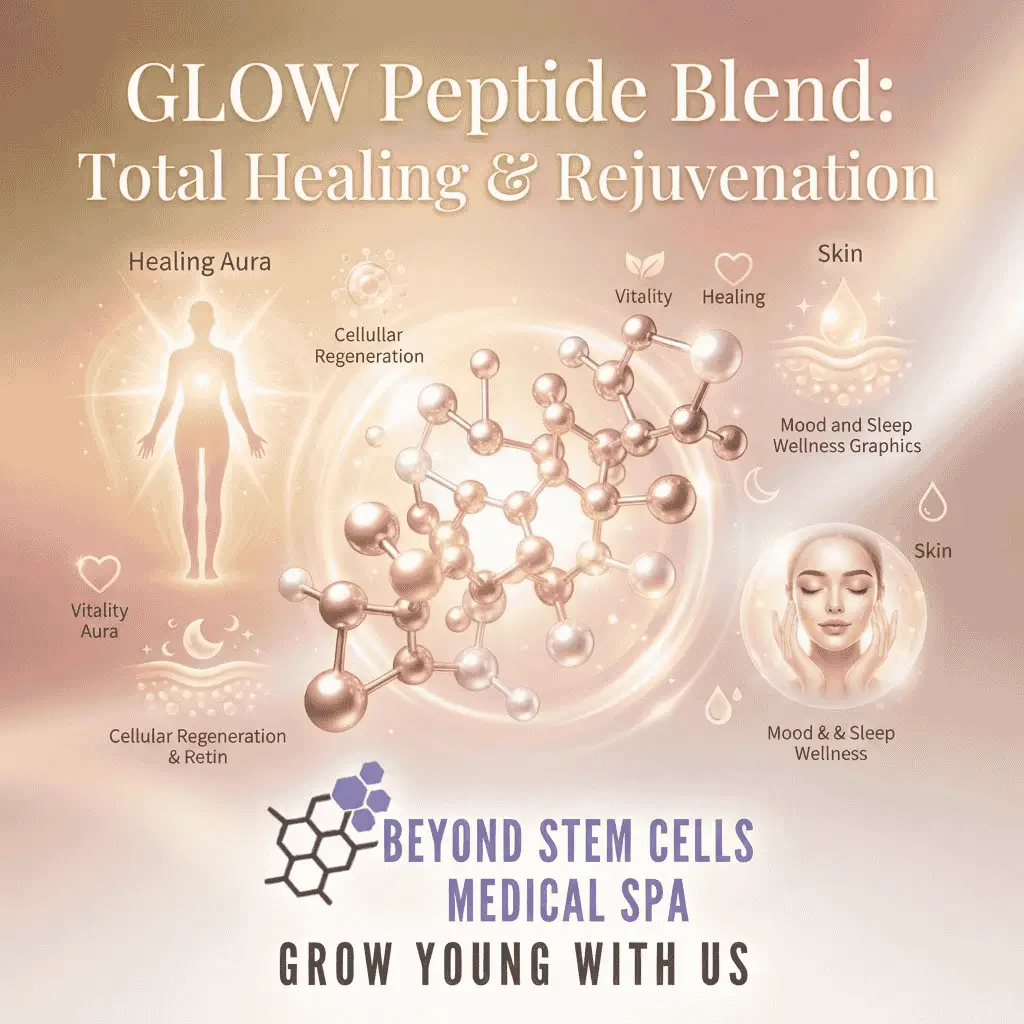
The GLOW peptide blend pairs BPC-157 and TB-500 (studied for tissue repair and recovery) with GHK-Cu (studied for collagen support and skin radiance). Patients at Beyond Stem Cells have reported firmer, brighter skin, faster recovery from minor injuries and joint strain, and improved hair density — with mild injection-site burning or redness as the most commonly reported effect. It is not FDA-approved and should only be used under medical supervision.
- GLOW is Beyond Stem Cells’ peptide blend combining BPC-157, TB-500, and GHK-Cu.
- Patients in this article report firmer, brighter skin; faster recovery from minor irritation; quicker bounce-back after workouts and joint strain; and improved hair density over several months.
- The most commonly reported effect is mild, short-lived burning or redness at the injection site — not a claim of zero side effects.
- BPC-157 and TB-500 are not FDA-approved for human use; GHK-Cu has more established topical research behind it.
- Results and timelines vary by person — this article is educational, not medical advice.
What’s Actually in the GLOW Blend?
GLOW combines three peptides that Beyond Stem Cells’ clinical team pairs for a broader effect than any one alone would give:
| Peptide | What it’s studied for | Where patients notice it |
|---|---|---|
| GHK-Cu | Copper-binding peptide linked to collagen support and skin turnover | Skin firmness, texture, radiance |
| BPC-157 | Tissue-repair peptide studied for local healing and gut-lining support | Recovery from minor injuries, gut comfort |
| TB-500 | Peptide studied for cell migration and systemic recovery support | Joint comfort, post-workout bounce-back |
Real Patient Results
These are results reported directly by Beyond Stem Cells patients. Individual results vary, and none of the outcomes below are guaranteed for every patient.
Skin Firmness and Radiance — Colorado, Age 54
A 54-year-old patient in Colorado reported increased skin firmness, faster recovery from minor injuries, and a brighter overall complexion after starting the GLOW protocol.
Skin Texture and Healing — Mary, Idaho
Mary noticed her skin texture improved, described her skin as feeling tighter, and reported a brighter complexion along with faster healing from blemishes and minor skin irritation.
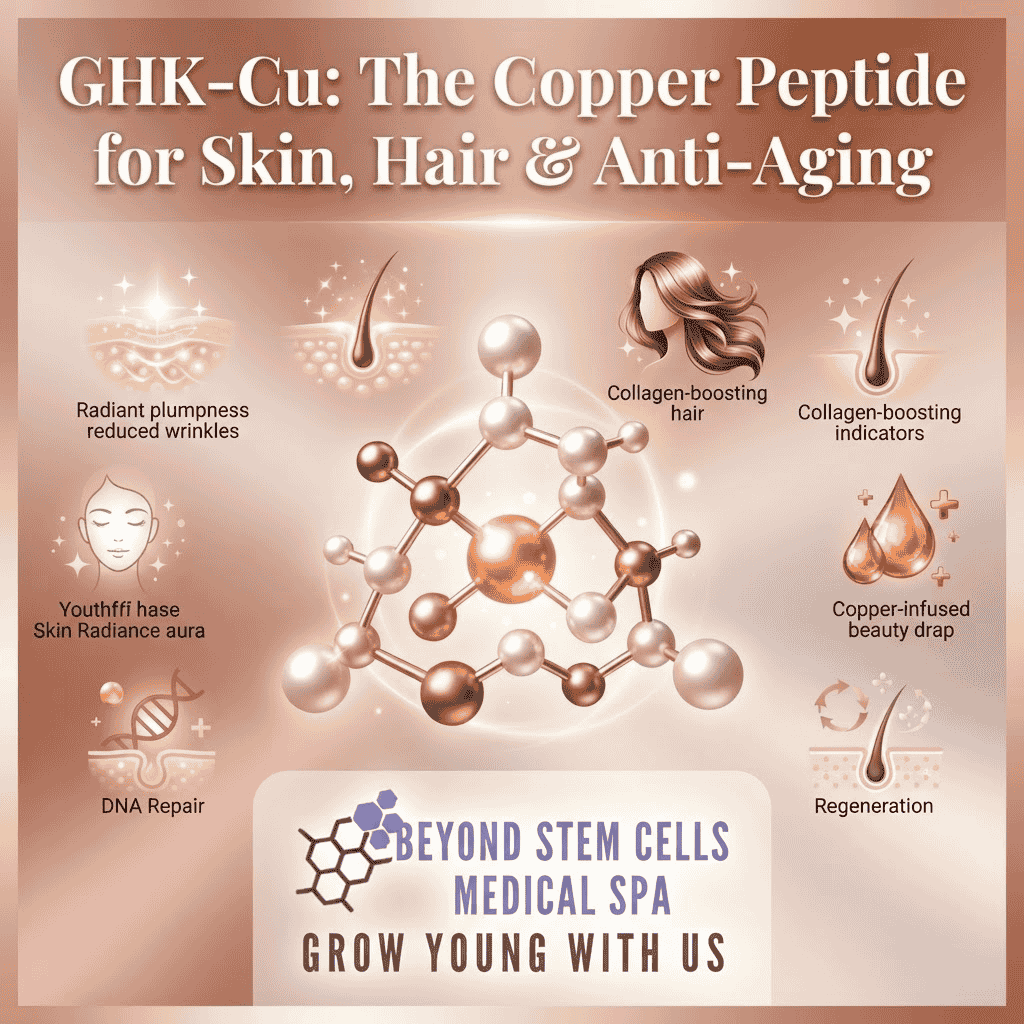
GHK-Cu is the peptide most associated with the skin-related results patients describe — it’s a naturally occurring copper-binding peptide that’s been studied for its role in collagen signaling and skin repair, which is why it’s paired into the GLOW blend rather than used alone. See the GHK-Cu peptide page for the full research summary.
— Mary, Idaho, GLOW peptide patient
Joint and Workout Recovery — Larry, Texas
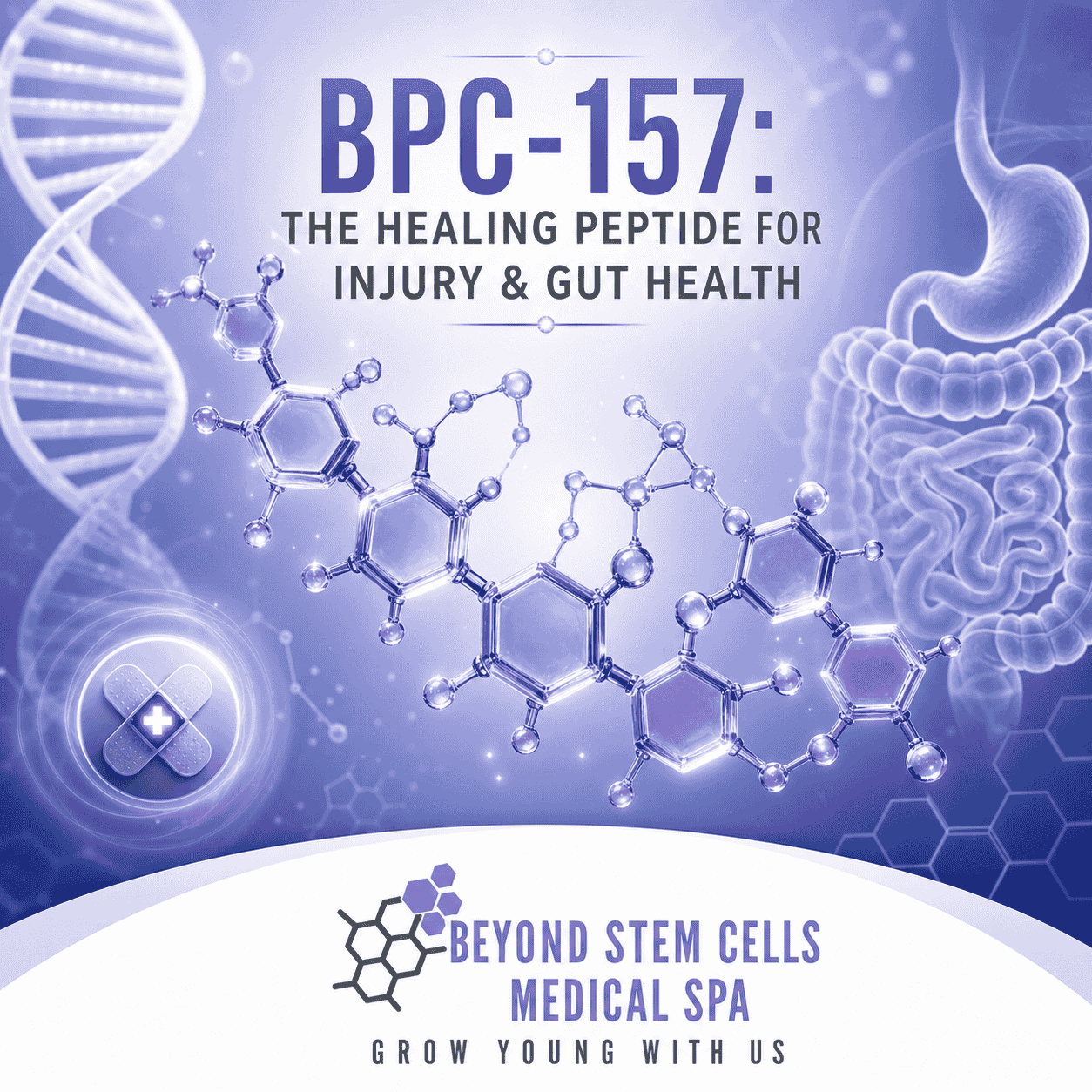
Larry reported improved joint comfort and quicker recovery after physical workouts. This lines up with why BPC-157 is included in the blend — it’s a peptide studied for its role in local tissue repair, which is the mechanism most often cited behind reports of reduced joint discomfort and faster post-workout recovery.
Hair Vitality — Lisa, Arizona
Lisa reported improved hair vitality, with increased hair density and better scalp health noticed over a multi-month period — a timeline that tracks with normal hair growth cycles, which is why hair-related changes tend to show up later than skin changes in patient reports.
Side Effects: What Patients Actually Report
The most commonly reported effect across GLOW patients is mild, short-lived burning or redness at the injection site. That’s the honest, complete picture — not a claim that the protocol carries zero risk. As with any injectable therapy, a clinician should review your health history and current medications before starting.
218 Reviews
IRB-Approved Program
Physician-Led Care
Is GLOW Right for You?
- Start with a consultation. Beyond Stem Cells’ clinical team reviews your health history before recommending any peptide protocol.
- Set expectations by goal. Skin and recovery changes are commonly reported earlier; hair density changes take longer given natural growth cycles.
- Ask about the full peptide therapy menu — GLOW is one blend among several offered, and your clinician can tell you whether a single peptide or a blend fits your goals better.
- Read more patient outcomes on the clinic’s testimonials page before booking.
Frequently Asked Questions
What is the GLOW peptide blend?
GLOW is a peptide blend offered at Beyond Stem Cells combining BPC-157, TB-500, and GHK-Cu — three peptides studied for tissue repair, systemic recovery, and skin/hair support respectively.
Is the GLOW peptide blend FDA-approved?
No. BPC-157 and TB-500 are not FDA-approved for human use, and the FDA flagged both as unsuitable for compounding in 2023 over safety and evidence concerns. GHK-Cu has more established topical and dermal research behind it. This content is educational, not medical advice, and any peptide therapy should only be pursued under medical supervision after a consultation.
What side effects are associated with the GLOW peptide blend?
The most commonly reported effect is mild, short-lived burning or redness at the injection site. Individual results and tolerability vary, and a clinician should review your health history before starting any peptide protocol.
How long until patients notice results from GLOW peptide therapy?
Patient reports referenced in this article describe changes over a period of weeks to several months, varying by the outcome tracked — skin texture and healing changes were often noticed earlier than hair density changes, which tend to take multiple months given normal hair growth cycles.
Ready to Talk to a Clinician About GLOW?
Beyond Stem Cells Medical Spa · Littleton, CO
Medical disclaimer: This article is educational and is not medical advice. Patient reports described here reflect individual experiences and are not guarantees of results for any other patient — individual results vary. BPC-157 and TB-500 are research peptides that are not FDA-approved for human use; the FDA flagged both as unsuitable for compounding in 2023. Peptide therapy should be pursued only after a consultation and under the supervision of a licensed clinician. Author: John Comandari, CEO, Beyond Stem Cells Medical Spa. Clinical oversight provided by Beyond Stem Cells’ physician-led care team.