
Grow Young With Us
Knee Replacement Alternatives: What to Try Before Surgery
Surgery is the right answer for some knees and the wrong answer for others. The difference comes down to what is left of your cartilage.
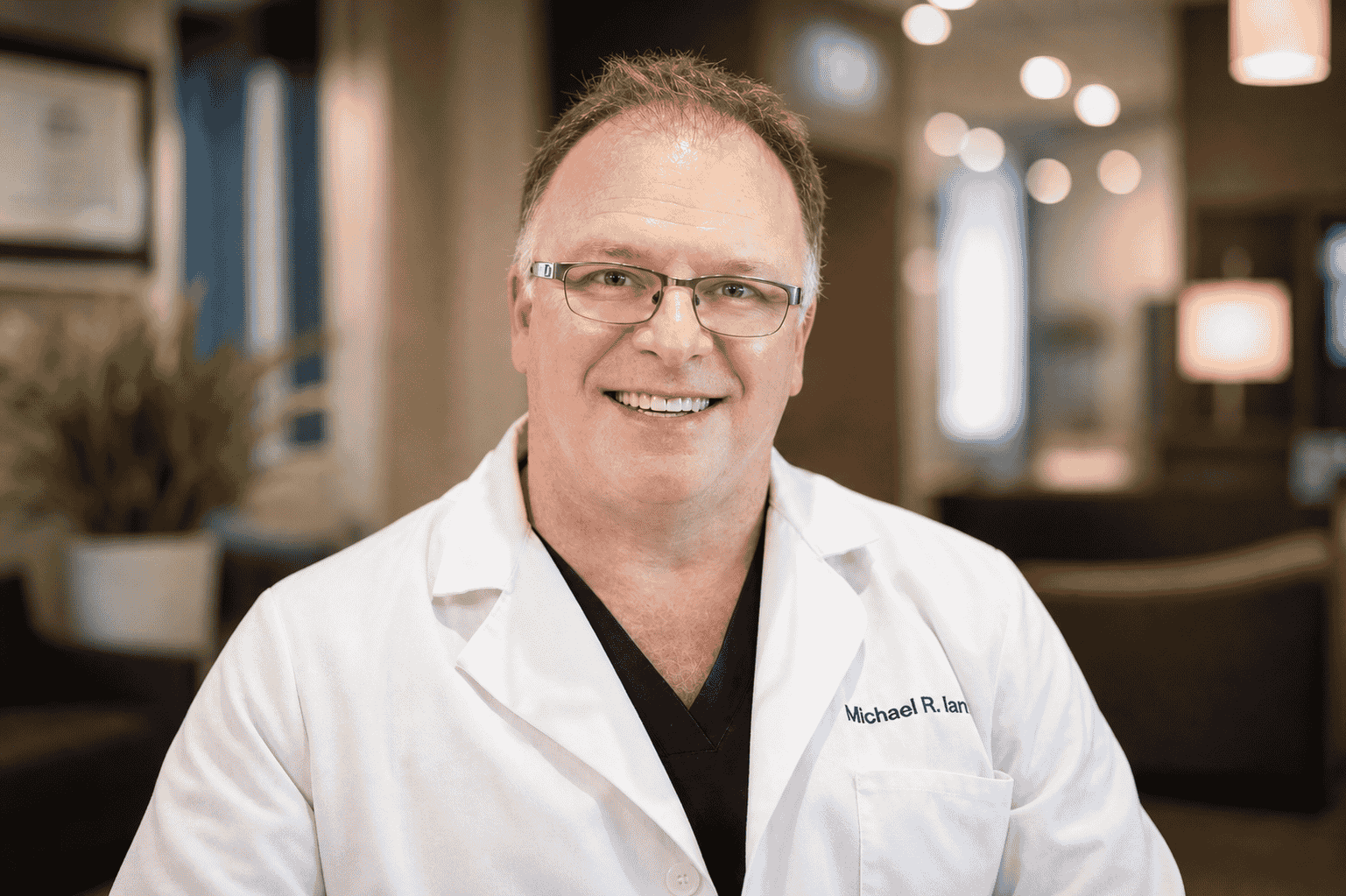
Medically reviewed by Dr. Michael Iannotti, MD
Beyond Stem Cells Medical Spa · Littleton, CO · Updated August 2026
Individual results vary. This article is information, not medical advice.
Quick Answer
The main non-surgical alternatives to knee replacement are regenerative treatments — stem cell growth factor therapy, PRP, PRF, exosome therapy and shockwave therapy — plus conservative care such as physical therapy and weight management.
- Best suited to: mild to moderate joint damage or early arthritis, where cartilage is worn but still there.
- Not a substitute for surgery when there is severe structural damage.
- Recovery: days to a few weeks, versus weeks to months for surgery.
- Timeline: most Beyond Stem Cells knee patients see gradual improvement at 4–12 weeks, and most need only a single session.
- The consultation is complimentary and is what settles whether you are a candidate.
TL;DR
There is one question underneath every knee decision: is there cartilage left to work with?
- Cartilage worn but present → regenerative therapy is on the table. Non-surgical, local anaesthetic, minimal downtime.
- Bone on bone, severe structural damage → replacement surgery is the honest answer, and no injection changes that.
- Waiting narrows your options. Beyond Stem Cells reports the best results come with early intervention — the window closes as cartilage goes.
Start here: Joint regeneration at Beyond Stem Cells or call (833) 720-7836.
Why people look for an alternative in the first place
Knee replacement works. It is one of the more successful operations in modern orthopaedics, and for a knee that is structurally finished it is the right call. But it is still surgery: general anaesthesia, a hospital stay, scarring, and a recovery measured in weeks to months rather than days.
Beyond Stem Cells puts the cost of knee surgery at often $20,000–$50,000 or more. So the question most people arrive with is reasonable: is there something worth trying first?
Often there is. Sometimes there is not. The rest of this page is about telling those two situations apart.

The question that decides everything: what is left of the cartilage?
Cartilage is the smooth layer that lets the joint glide. Arthritis wears it away gradually. Regenerative treatment works by supporting tissue that is still there — it does not manufacture new joint surface out of nothing.
So the two cases are genuinely different problems:
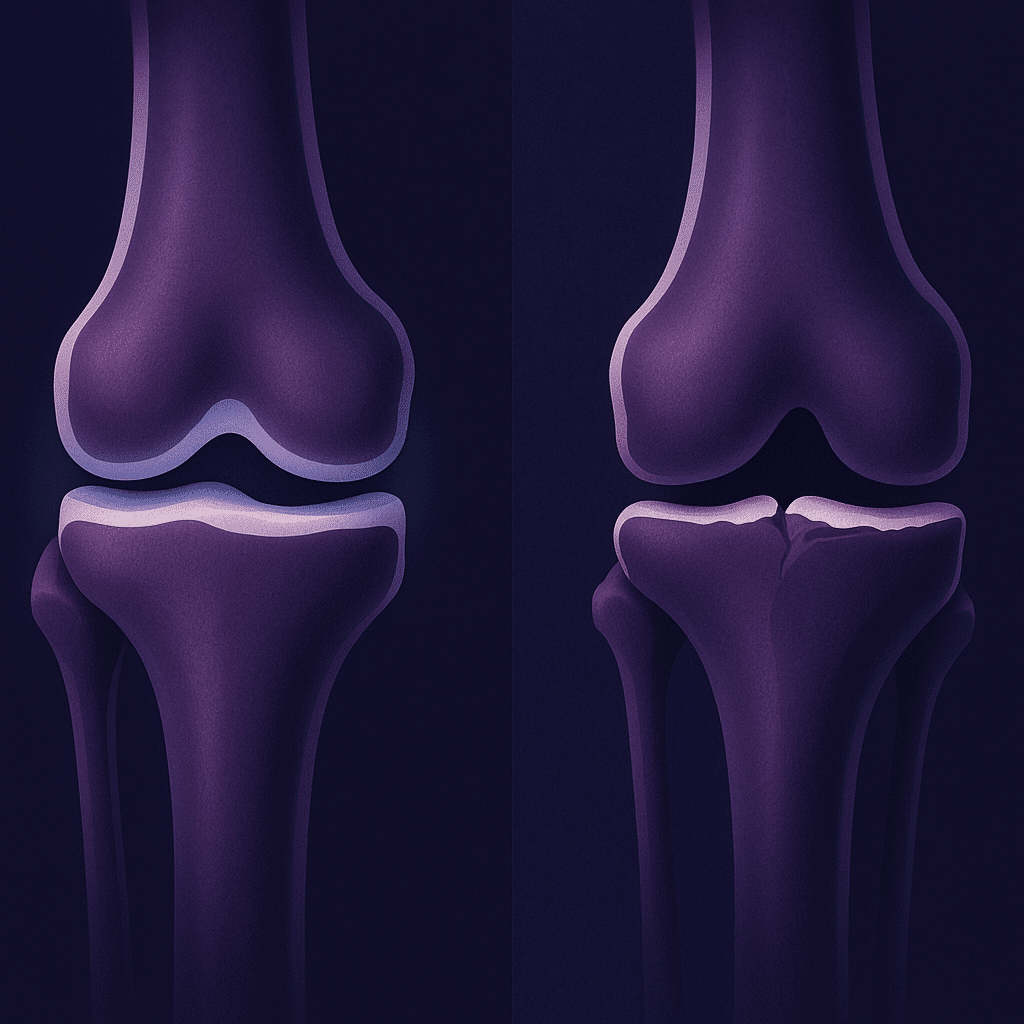
Pain level is a poor guide. Plenty of people with significant cartilage loss report manageable pain, and plenty with early wear are in real trouble. Imaging and an in-person assessment settle it; a symptom diary does not.
What Beyond Stem Cells actually offers instead
Five regenerative approaches, used alone or in combination depending on what the assessment finds:
Stem cell growth factor therapy
Concentrated growth factors delivered to the joint to support the tissue that remains. This is the modality the clinic is built around. How stem cell therapy works →
PRP — platelet-rich plasma
Your own blood, concentrated and re-injected. The most established name in regenerative joint care and often the entry point. If you are weighing it against stem cell therapy, the direct comparison is here.
PRF — platelet-rich fibrin
A second-generation platelet preparation with a fibrin matrix, processed differently from PRP and typically used as part of a combination plan.
Exosome therapy
Cellular signalling aimed at the joint environment, usually layered into a protocol rather than sold on its own. Exosome therapy explained →
Shockwave therapy
Acoustic pulses used to stimulate healing in soft tissue around the joint. Often paired with injectable treatment rather than replacing it.
Surgery versus regenerative therapy, side by side
Beyond Stem Cells publishes this comparison on their stem cell therapy vs surgery page:
| Surgery | Stem cell therapy | |
|---|---|---|
| Anaesthesia | Yes | Usually local only |
| Hospital stay | Often required | None |
| Recovery time | Weeks to months | Days to a few weeks |
| Scarring | Yes | Minimal to none |
| Cost | Often $20,000–$50,000+ | Typically lower overall, depending on treatment area |
| Ideal candidate | Severe structural damage | Mild to moderate damage or early arthritis |
Read the bottom row first. It is the one that decides whether the rest of the table is even relevant to you.
What the timeline actually looks like
For knee patients specifically, Beyond Stem Cells reports:
- Procedure: performed under local anaesthesia, with minimal downtime.
- First changes: gradual improvement typically between 4 and 12 weeks.
- Duration: results often last 2–5 years or longer.
- Sessions: most patients need only one.
- Conditions addressed: osteoarthritis, meniscus tears, ligament injuries and joint degeneration.
Nothing here is instant. If a provider promises immediate relief from a regenerative injection, that is a reason to slow down, not speed up.
What it costs
Beyond Stem Cells does not publish a fixed price for joint treatment, because the plan depends on the joint, the extent of damage and which therapies are used. What they do state is that regenerative treatment is typically a lower overall cost than surgery, against a surgical benchmark of $20,000–$50,000+.
Your exact plan and price come out of the complimentary consultation, and financing is discussed at the same appointment. There is also a $500 off your first visit offer running.
How to evaluate a provider
Regenerative medicine is an uneven field. These questions separate a real assessment from a sales pitch:
- “Do I still have cartilage to work with?” If you get a treatment plan before you get an answer to this, the plan is a guess.
- “Am I better served by surgery?” A provider who will never say yes to this is not assessing you.
- “What specifically are you injecting, and how is it prepared?” PRP, PRF, growth factors and exosomes are different things with different evidence behind them.
- “What does the follow-up look like?” Improvement is measured over months, so there should be a review schedule.
- “Can I verify your licence?” You can check any Colorado provider — here is how.
Beyond Stem Cells runs an IRB-approved regenerative medicine program in Littleton and publishes the research it works from. Ask any clinic you are considering for the same two things.
If you are not a candidate
This is worth saying plainly, because most pages on this topic will not. If your cartilage is gone, regenerative therapy is not a substitute for replacement — and delaying a needed surgery to try injections first can mean more pain and more deconditioning for no gain.
A consultation that ends in “you should see a surgeon” is a useful outcome, not a wasted appointment.
Frequently asked questions
What are the alternatives to knee replacement surgery?
Non-surgical options include regenerative treatments such as stem cell growth factor therapy, PRP, PRF, exosome therapy and shockwave therapy, alongside conservative care like physical therapy and weight management. Beyond Stem Cells offers regenerative options for patients with mild to moderate joint damage or early arthritis. Candidacy is determined at a complimentary consultation.
Who is a candidate for a knee replacement alternative?
Regenerative therapy is generally suited to mild to moderate joint damage or early arthritis, where cartilage is worn but still present. Surgery remains appropriate for severe structural damage. Beyond Stem Cells states best results come with early intervention, so the window matters.
How long does recovery take compared with knee surgery?
Beyond Stem Cells reports surgery recovery as weeks to months, versus days to a few weeks for stem cell therapy. Their knee patients typically see gradual improvement between 4 and 12 weeks, with most needing only a single session.
How long do the results last?
Beyond Stem Cells reports results often lasting 2 to 5 years or longer, with most patients needing only a single session. Individual results vary.
Is a knee replacement alternative cheaper than surgery?
Beyond Stem Cells cites knee surgery at often $20,000–$50,000 or more, and describes stem cell therapy as typically a lower overall cost depending on treatment area. They do not publish a fixed joint price; your exact plan and price are confirmed at a complimentary consultation.
Does insurance cover regenerative knee treatment?
It is generally treated as elective, so plan to pay out of pocket. Plan terms vary — confirm directly with your carrier.
Find out if you are a candidate
The consultation is complimentary, and it answers the only question that matters up front: is there still cartilage to work with, or is surgery the better path?
(833) 720-7836
Book a free consultation
Knee pain treatment in Denver
Beyond Stem Cells Medical Spa · 5912 S Cody St, Suite 201, Littleton, CO 80123
Serving Denver, Littleton, Centennial, Englewood, Highlands Ranch and Lakewood
Get directions → ·
See patient results →
Medical disclaimer. This article is general information about alternatives to knee replacement surgery and is not medical advice, a diagnosis, or a treatment recommendation. Regenerative therapies are not appropriate for every patient and are not a substitute for surgery where surgery is indicated. Individual results vary and no outcome is guaranteed. Timelines, durations and comparisons on this page reflect figures published by Beyond Stem Cells at time of writing and are subject to change; the surgical cost range cited is a general benchmark, not a quote for any specific procedure or provider. Every treatment plan begins with an in-person consultation to determine candidacy. Direct insurance questions to your own carrier.